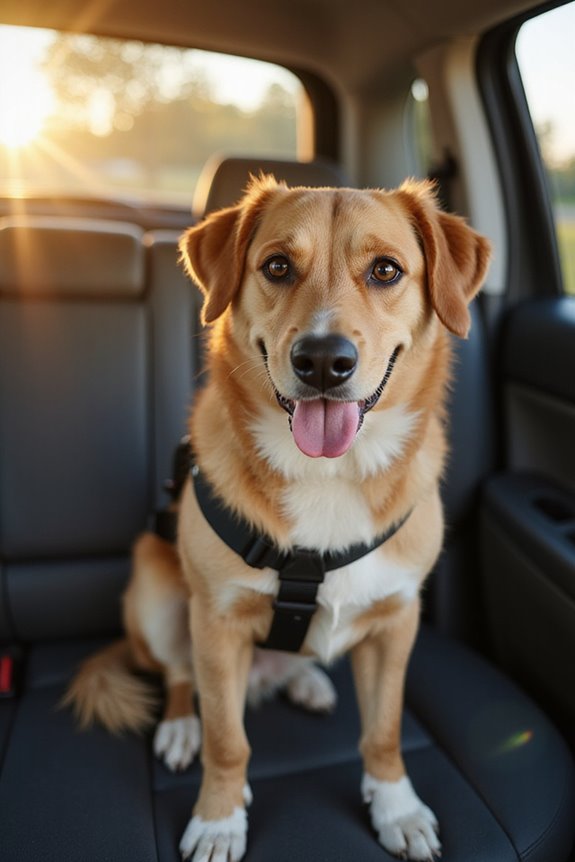

Dog seat belts can enhance safety during travel, but their effectiveness varies markedly. Research indicates that only a few products meet safety standards, with a disheartening statistic showing only one out of eleven harnesses passing crash tests. Common issues involve weak buckles and inadequate webbing that can fail under impact. Proper fit is also essential; a harness must securely wrap around the dog’s chest and shoulders. Understanding these factors can help guarantee your pet’s safety on the road, leading to more insights ahead.
Key Takeaways
- Many dog seat belts on the market fail to meet safety standards and only a few have been successfully crash-tested.
- Weak plastic buckles and insufficient webbing thickness are common failures in dog restraints, compromising overall safety.
- The design and fit of harnesses are critical; poorly designed harnesses can restrict movement and increase injury risk.
- Proper installation and fit of the harness are essential for effectiveness, ensuring it wraps securely around the dog’s chest and shoulders.
- Consumer education is lacking, leading to low restraint use, and many misleading terms like “crash-tested” create confusion about product safety.
Effectiveness of Current Dog Seat Belts
You may be interested
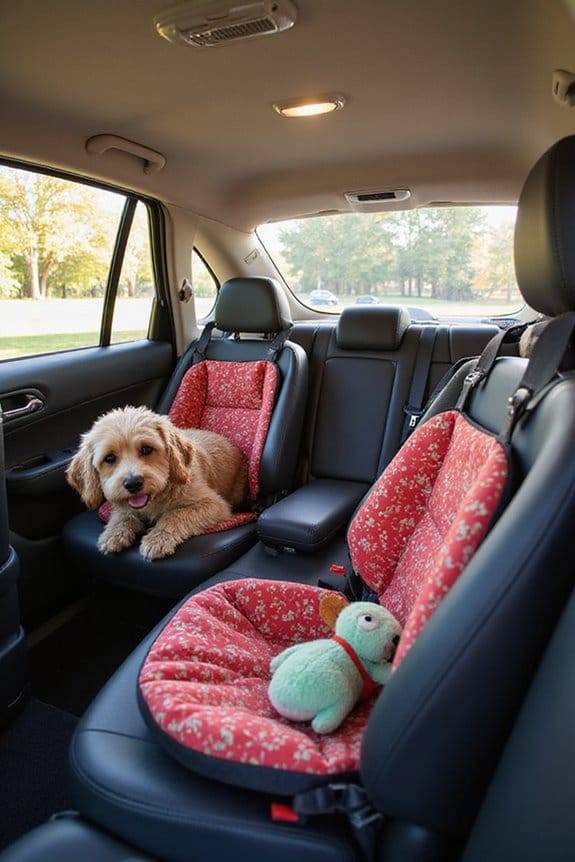
When exploring the effectiveness of current dog seat belts, it is essential to recognize the considerable variability in product quality and the importance of proper design. Many products on the market lack rigorous testing, and only a handful meet established dog seatbelt standards. According to a study by the Center for Pet Safety, only one out of eleven harnesses performed adequately in crash tests.
Effective dog seat belts greatly enhance safety during vehicle travel by minimizing injury risk, but they rely heavily on correct fit and high-quality construction. To guarantee your furry companion’s safety:
- Research products with verified crash testing.
- Educate yourself on the importance of proper usage.
- Prioritize brands committed to consumer education on safety practices.
Additionally, it’s vital to ensure that harnesses have adjustable straps to achieve a snug fit for your pet.
Recommended Products

SAFETY AND DURABLE - The material of our seat belt be extra durable, made of high density nylon fabric to ensure durability.The 360° zinc alloy swivel snap and universal fit buckles are sturdy enough to ensure the safety of your dog while traveling.

Keep Your Pets Safe: Your dog loves car rides, but roaming dogs can lead to distractions and dangerous conditions. Keep both you and your pup secure with our car dog harness seat belt, which easily buckles into any seatbelt outlet in your vehicle

Crash-Tested Safety & Comfort: The Kurgo Enhanced Strength Tru-Fit Dog Car Harness offers a crash test-certified fit with all-steel buckles
Common Failure Points in Dog Restraints
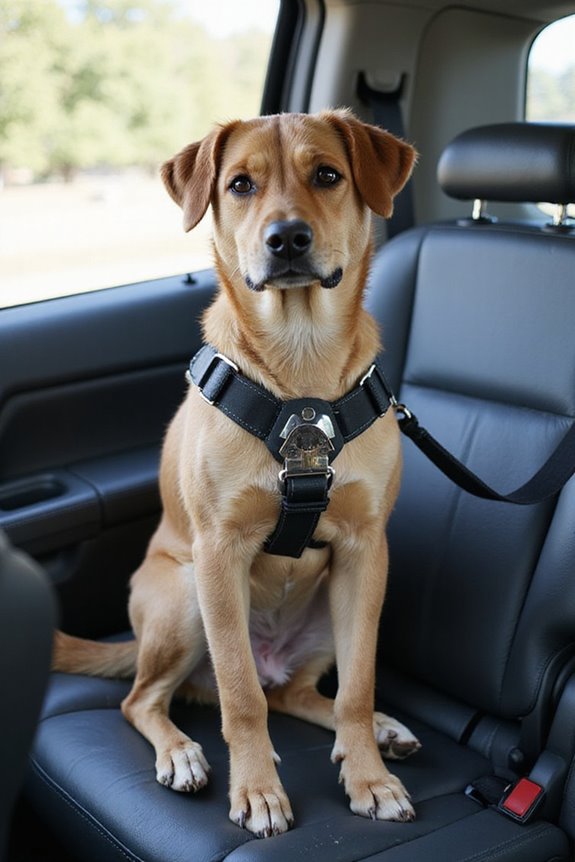
While understanding the common failure points in dog restraints, it is vital to recognize that many products rely on materials and designs that may not withstand the forces encountered during a collision.
Key concerns include:
- Buckle Integrity: Many restraints use weak plastic buckles akin to backpack buckles, which can break under crash forces. Testing showed only two out of 25 harnesses maintained buckle integrity.
- Webbing Durability: Insufficient webbing thickness often leads to tearing during impacts, compromising protection. Instead of minimal fraying, high-quality harnesses must have reinforced webbing to endure stress.
- Design Flaws: Some designs inadequately distribute force, heightening injury risk.
Choosing a restraint that prioritizes buckle integrity and webbing durability is significant, ensuring your dog’s safety during travel. Prioritize models with rigorous independent testing for dependable performance.
Recommended Products

DURABILITY - No matter how well-trained your pup is, there’s no guarantee they won’t tug, pull, or chew on the seat belt during the ride. Our seat belts are crafted from heavy-duty nylon webbing with reinforced stitching for maximum durability. The sturdy metal components are designed to prevent unbuckling or snapping at the worst possible moment.

DURABILITY - No matter how well-trained your pup is, there’s no guarantee they won’t tug, pull, or chew on the seat belt during the ride. Our seat belts are crafted from heavy-duty nylon webbing with reinforced stitching for maximum durability. The sturdy metal components are designed to prevent unbuckling or snapping at the worst possible moment.

🐕【Lifetime After-sale Service】 Worry-Free After-Sales Service. If you have any questions for our pet seat belts for car, please let us know!
Biomechanical Impact of Harnesses
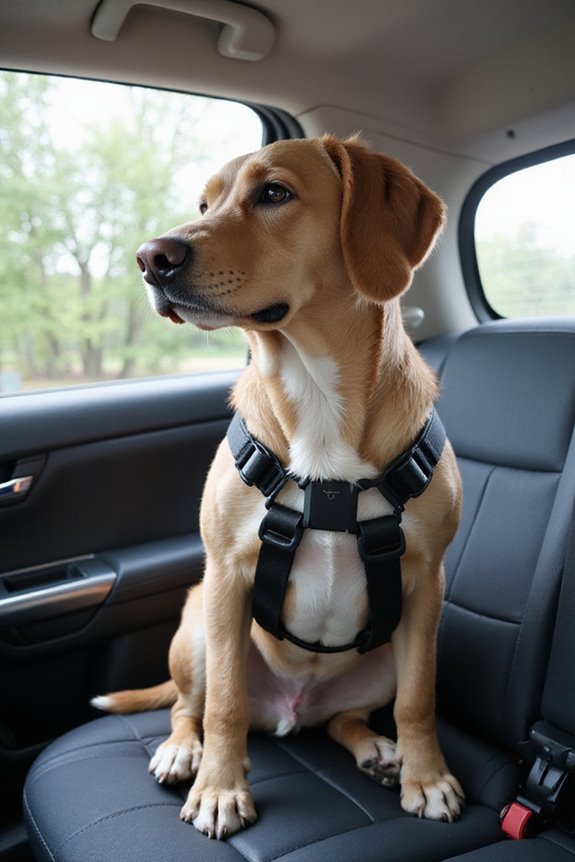
Understanding the limitations of dog restraints helps highlight the significance of harness design on a dog’s biomechanics. Different harness types considerably influence limb movement, impacting overall canine biomechanics. For example:
- Straight-front harnesses: Allow greater shoulder and elbow range of motion, promoting natural movement.
- Front-clip harnesses: Restrict shoulder and elbow movement, potentially altering gait mechanics.
This reduction in extension and flexion can lead to compensatory movements that stress other joints, affecting balance and agility. Over time, restrictive harness designs may even contribute to musculoskeletal disorders. It is crucial to choose harness designs that maximize movement freedom, aligning with breed-specific anatomical traits. Evaluating these biomechanical effects is critical for ensuring our dogs maintain peak health and mobility during activities.
Importance of Proper Fit and Installation
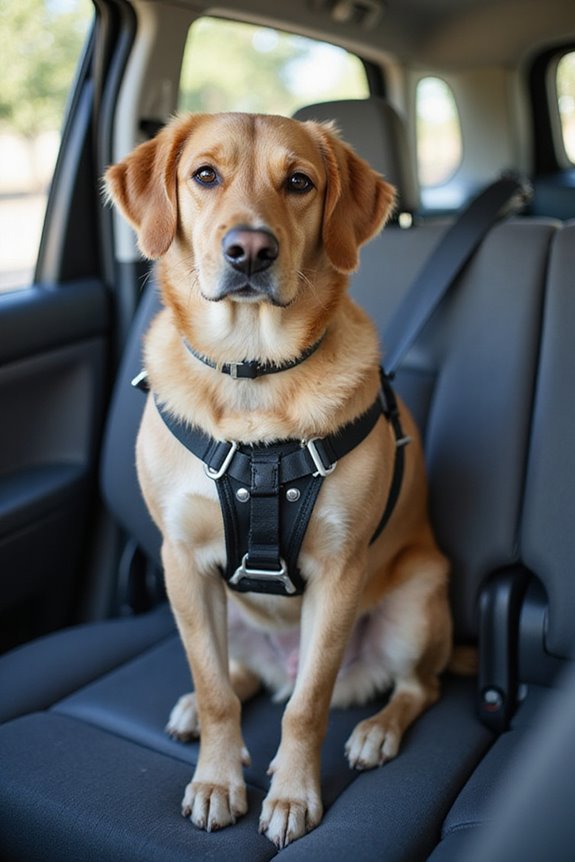
Ensuring your dog’s seat belt fits properly isn’t just a matter of comfort; it directly affects their safety during travel. A secure harness keeps your dog from excessive movement, which is essential in a crash scenario. Remember these fit adjustments and installation guidelines:
- Make sure the harness wraps around the chest and shoulders snugly without being too tight.
- Use adjustable straps to customize the fit based on your dog’s body type.
- Attach the seat belt or tether to the designated harness points.
- Secure it to the vehicle’s LATCH system or seat belt buckle, checking for slack.
- Always double-check connections before each trip.
Proper fit and installation not only enhance comfort but also maximize restraint effectiveness, ensuring your furry friend travels safely.
Recommended Products
](https://m.media-amazon.com/images/I/41ji4lsxEIL._SL500_.jpg)
[UPDATED VESION, EASY TO PUT ON & TAKE OFF] This dog harness has 3 buckles( One is on the neck with Lockable, two are on the chest), NO NEED go through dog’s head. This will let your dog loves to wear harness!

Keep Your Pets Safe: Your dog loves car rides, but roaming dogs can lead to distractions and dangerous conditions. Keep both you and your pup secure with our car dog harness seat belt, which easily buckles into any seatbelt outlet in your vehicle.

Headrest Restraint Design --- The dog seatbelt (2pcs included) is designed with headrest restraint, which is suitable for various headrest models. The straps that hang on the headrest are connected by lockable quick shackles that are tight and not easy to open, ensuring the safety of your pet. If you leash it to the maximum length, you will have a normal leash. Ideal Thanksgiving and Christmas Gift for Pets.
Consumer Concerns and Market Realities
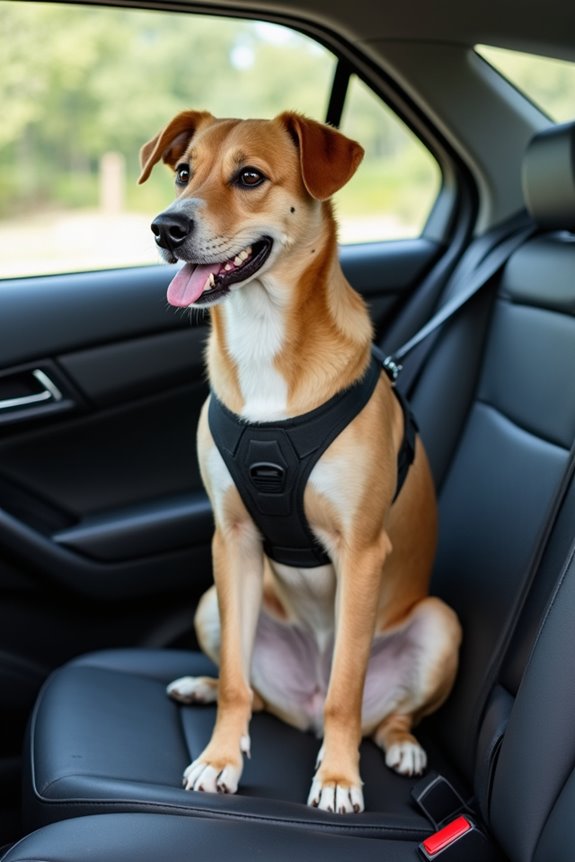
When it comes to securing our pets during travel, consumer concerns and market realities reveal a complex picture, which can greatly impact safety outcomes. A significant number of dog owners remain unaware of the dangers; shockingly, less than 20% use any restraint while traveling. This lack of consumer education leads to risky situations, as the crash test results indicate that many seat belts fail, with only one brand passing the necessary tests. Product transparency is also lacking; terms like “crash-tested” can be misleading. Consumers often find it difficult to navigate the market due to inconsistent quality and performance. It is crucial to advocate for better regulations and informed choices to enhance pet safety on the road, especially considering the importance of safety features in ensuring reliable restraints.
Recommended Products

3-in-1 Multifunctional Dog Car Seatbelt: The dog leash for car features 2 different fixed buckles: safety buckle and hook latch. Safety buckle is fastened directly to the car seatbelt buckle, while hook latch is fixed in safety seat or car trunk hook. Freely select the fixing position and carve out an area for your dog to move safely in the car.

SAFER & MORE DURABLE: Made from high-density nylon with highly reflective stitching, this dog car seat belt is strong, durable, and built for safety. The heavy-duty 360° zinc alloy swivel buckle helps prevent tangling and keeps your dog secure during every car ride.

3-in-1 Dog Seat Belt - Our dog seat belt is equipped with 2 different types of car buckles to keep your lovely dog safe and prevent you from distracting while driving. This dog seatbelt not only hook to vehicle's latch bar, but also the car seat belt buckle. Our buckle design is universal for all cars
Enhancing Vehicle Safety With Dog Seat Belts
Enhancing vehicle safety with dog seat belts is essential, especially considering the alarming statistics regarding unrestrained pets during travel. Research shows that unrestrained dogs can experience forces up to 19,000 pounds in crashes, leading to severe injuries or even fatalities. This is where a quality dog seat belt becomes necessary for both pet safety and safe driving.
When selecting dog seat belts, it’s important to choose those that have undergone independent crash testing. Properly fitting the restraint to your dog’s size and weight is also important.
Here are best practices for enhancing safety with dog seat belts:
- Choose crash-tested products.
- Secure belts to designated anchor points.
- Combine restraints with carriers when applicable.
Recommended Products

DURABILITY - No matter how well-trained your pup is, there’s no guarantee they won’t tug, pull, or chew on the seat belt during the ride. Our seat belts are crafted from...
Future Directions for Dog Restraint Development
As we look toward the future of dog restraint development, it becomes increasingly clear that advancements in technology will play a crucial role in enhancing pet safety during travel.
- AI Integration: Future restraints may use AI to monitor dog behavior and movement, adapting in real-time for maximum safety.
- Sensor Technology: Biometric sensors could track essential signs, alerting owners of any distress or unsafe conditions.
- Smart Connectivity: These restraints may connect with smartphones, providing geofencing alerts if the dog strays.
- Material Innovations: Lighter, stronger materials will enhance durability and comfort on long journeys.
- Robotic Assistance: Future developments could include robotic devices that monitor restraints and provide real-time alerts during emergencies.
- Safety Ecosystems: Integrated systems could revolutionize pet care through thorough health tracking and safety management.
Frequently Asked Questions
Can Dogs Wear Regular Seat Belts Instead of Dog-Specific Restraints?
I wouldn’t recommend using regular seat belts for dogs. They just don’t meet safety standards. Instead, harness types designed for dogs guarantee proper fit and protection, keeping our furry friends safe during car rides.
Are There Specific Breed Recommendations for Dog Seat Belts?
When selecting a dog seat belt, I always consider breed suitability and safety features. It’s essential to find a harness that fits snugly, ensuring my pup stays safe and comfortable during our travels together.
How Often Should Dog Seat Belts Be Replaced?
I check my dog’s seat belt regularly, especially for material durability. Following safety standards, I replace it if I notice wear or after about one to two years, depending on usage. Safety’s always my top priority!
Can I Use a Dog Seat Belt for Multiple Pets?
I wouldn’t recommend using one dog seat belt for multiple pets. For true multi-pet safety, each dog needs its own harness compatibility. Separate restraints keep everyone safe and prevent tangling during those unexpected moments on the road.
Are There Differences in Seat Belt Effectiveness by Dog Size?
I’ve noticed that small dogs often slip out of their harnesses during sudden stops, while large dogs can suffer severe injuries from improper fit. Effectiveness really does vary by size, impacting safety and comfort.