
To socialize an aggressive dog, I recommend a structured approach focused on desensitization and counterconditioning. Start by understanding your dog’s triggers and using gradual exposure techniques, rewarding calm behavior with treats or praise. Implement controlled social interactions with calm dogs while closely monitoring body language to prevent escalation. Establish a predictable routine to build trust, and avoid any punitive measures. As you progress, you’ll uncover further strategies to enhance your dog’s social skills and reduce aggression.
Key Takeaways
- Begin by desensitizing your dog to triggers at a safe distance to reduce anxiety and fear responses.
- Use positive reinforcement to reward calm behaviors and gradually introduce social interactions with other dogs.
- Monitor your dog’s body language closely to prevent aggression and adjust exposure levels as needed.
- Consider structured playdates with calm dogs to model appropriate behavior and promote social learning.
- Engage a professional trainer for guidance in developing a customized socialization plan and ongoing support.
Understanding Aggressive Behavior in Dogs
You may be interested
Understanding aggressive behavior in dogs requires a thorough examination of various factors that contribute to such actions. From my experience, I’ve learned that aggression triggers are often rooted in fear responses. For instance, fearful dogs may growl or snap when they feel threatened, indicating a defensive reaction. Pain or health issues can also lead to aggression, as they feel the need to protect themselves.
Furthermore, an aggressive dog’s behavior can be influenced by age, with older dogs manifesting more aggression than younger ones. Male dogs tend to exhibit higher aggression levels, potentially due to hormonal influences. Additionally, smaller breeds, like Chihuahuas, are often more defensive, which can amplify aggressive responses. Understanding these intricacies is essential for effective intervention.
The Role of Desensitization and Counterconditioning
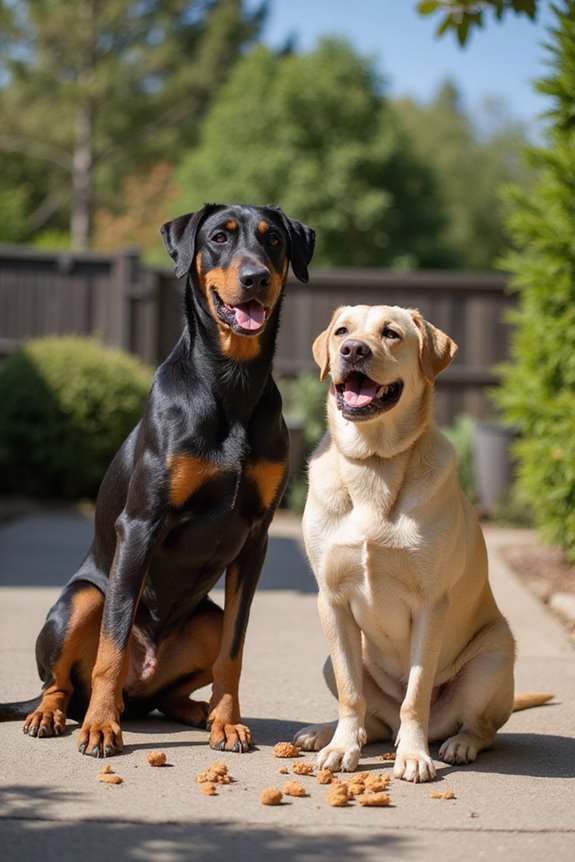
Desensitization and counterconditioning are critical techniques for addressing aggressive behavior in dogs, particularly when rooted in fear. As I’ve learned, employing desensitization techniques involves slowly exposing the dog to its triggers at a low intensity. Gradually increasing this exposure guarantees the dog becomes less reactive over time. Likewise, counterconditioning strategies help replace the negative emotions associated with a trigger by pairing it with high-value rewards, like treats.
These methods require consistency and patience, as they’re grounded in classical conditioning principles. By focusing on developing calmer responses, such as sitting quietly or maintaining a relaxed posture, I can effectively reshape my dog’s reactions. Ultimately, the goal is to create positive associations, fostering a responsive and gentle demeanor in situations that previously provoked aggression.
Recommended Products

FREEZE DRIED RAW BEEF LIVER DOG TREATS – BITE SIZED FOR TRAINING, 2.1 OZ BAG: High protein dog treats made with beef liver. Perfect as high value dog training treats, puppy training treats, and everyday rewards
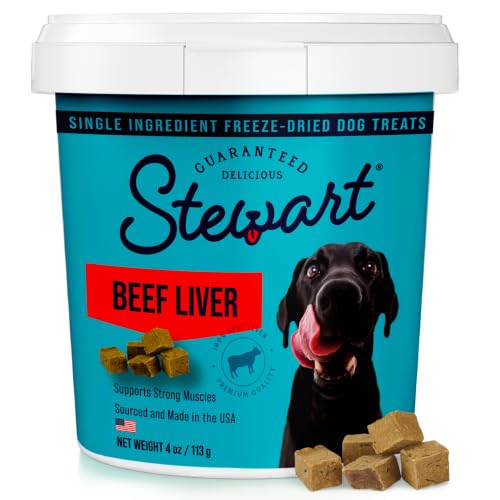
Daily Training Treat or Meal Topper: Our 4 ounce tub of single ingredient freeze dried beef liver contains approximately 90 pieces for an irresistible and high-protein reward or food topper for dogs and cats of all sizes

FREEZE DRIED RAW CHICKEN HEART DOG TREATS – PREMIUM HIGH VALUE REWARDS, 1.9 OZ BAG: High protein dog treats made with single ingredient chicken hearts for a special, satisfying reward dogs love
Practical Techniques for Controlled Social Exposure
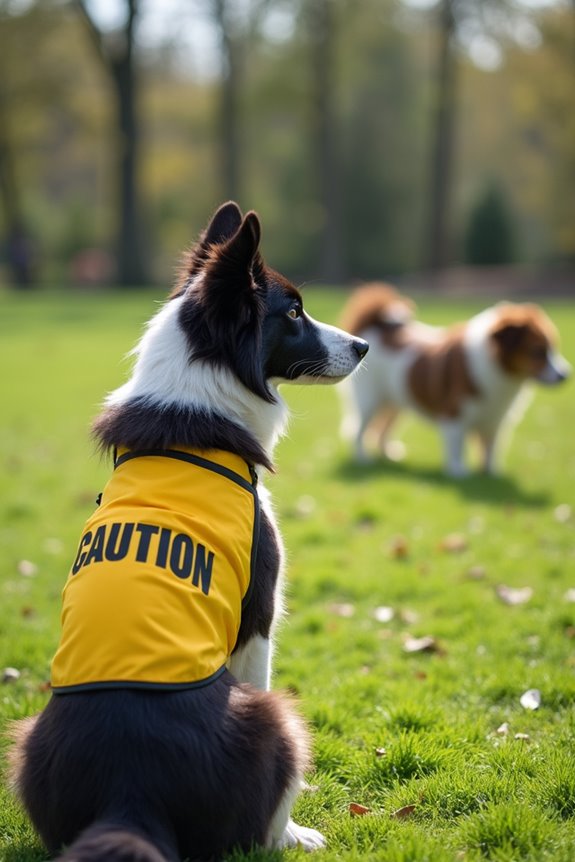
Addressing aggressive behavior in dogs requires practical techniques for controlled social exposure. To begin with, utilize leash management to maintain safety while introducing your dog to calm, familiar environments. Start at a distance where your dog feels secure, gradually decreasing this distance as they tolerate the stimuli better. Monitor their body language closely to prevent escalation.
Key Techniques include:
- Structured Playdates: Arrange visits with calm dogs to model positive behavior.
- Positive Reinforcement: Reward calm, non-aggressive actions consistently.
- Gradual Exposure: Slowly introduce diverse social scenarios, adjusting based on stress levels.
Each session should foster positive experiences, building your dog’s confidence and adaptive skills over time. Patience is essential, ensuring you adapt your strategies as needed.
Recommended Products

【No Pull & No Choke Design】: This harness simply goes through the dog's head, snaps on the belly and that's the end of it. Besides, the D-ring on the chest strap is used for no pull dog training and guiding direction, and the O-ring on the back is used for daily dog walking. The triangular design on both sides of this no pull harness helps to distribute the pulling force, so you don't have to worry about the dog choking when suddenly pulling.
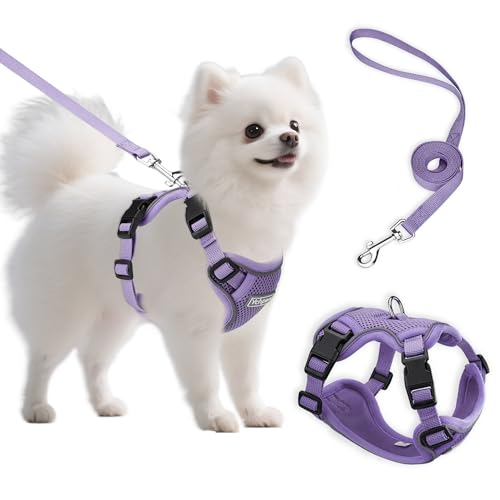
Size Suggestion: S size is suitable for Neck Girth 10-13in and Chest Girth 10-17in, dogs weighing 8-12lbs. Please measure your pet and refer to our size chart before purchasing. You can refer to the video to see how to measure your dog for size, and how to adjust and put on the harness. Not suitable for large dogs

Importance of Parallel Walks in Socialization
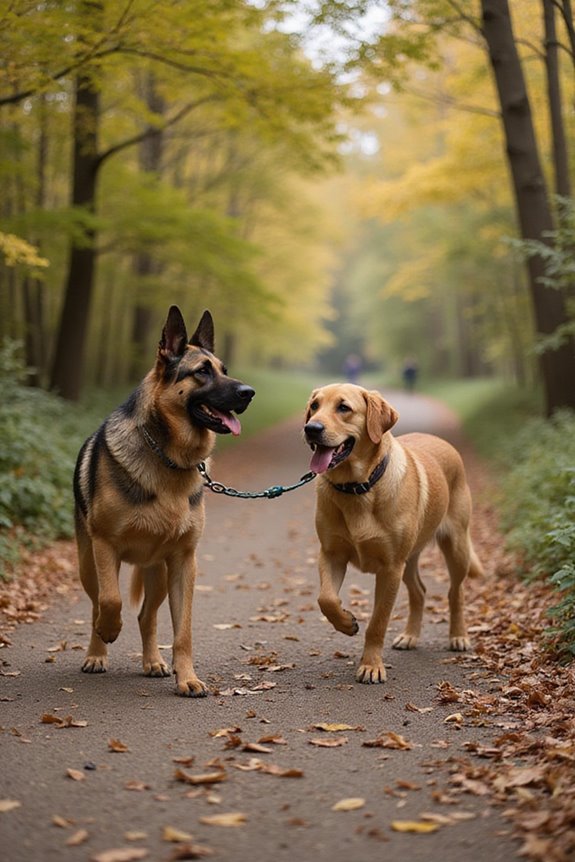
Parallel walks play an essential role in the socialization of aggressive dogs, providing a structured environment that minimizes stress and promotes positive interactions.
Recommended Products

Effective No-Pull Solution: The PetSafe Easy Walk Harness helps create pull-free walks by using a martingale loop design that applies gentle, gradual pressure to reduce lunging
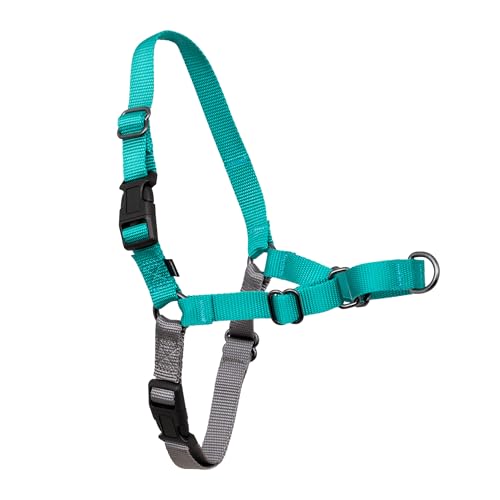
Helps Stop Pulling: Patented Martingale loop design puts gradual pressure on your dog’s shoulders to safely and effectively stop pulling; a front leash attachment helps you guide your dog

Helps Stop Pulling: Patented Martingale loop design puts gradual pressure on your dog’s shoulders to safely and effectively stop pulling; a front leash attachment helps you guide your dog
Parallel Walk Benefits
- Controlled Exposure: Dogs are kept at a safe distance on leashes, fostering distance management vital for avoiding aggression.
- Positive Associations: These walks help dogs learn that the presence of another dog doesn’t always mean a threat, allowing rewarding experiences.
- Gradual Proximity: By starting at a safe distance, we can slowly decrease it, which gradually builds comfort between the dogs involved.
- Calm Interactions: The steady pace reduces arousal levels, enabling dogs to interact politely without the stress of direct confrontation.
Recognizing Dog Body Language and Stress Signals
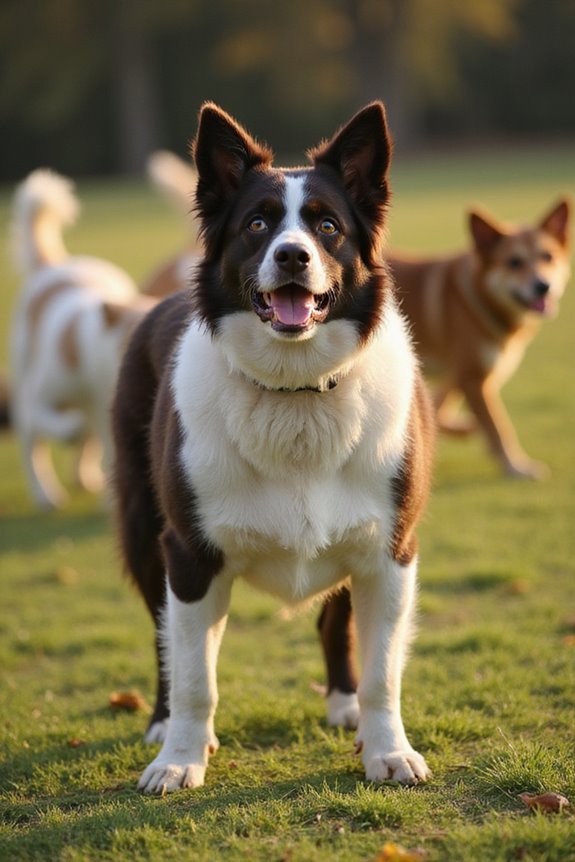
Understanding your dog’s body language and stress signals is essential for anyone working with an aggressive dog. Recognizing these indicators can help you manage and reduce their anxiety, preventing potential aggression. Here are key signals to look out for:
- Facial Expressions: A hard stare with forehead wrinkles often shows heightened alertness. Tension around the mouth, yawning, or lip licking may precede aggression.
- Postural Signals: A stiff body and forward-leaning posture suggest readiness to engage. Raised hackles indicate high arousal, while a tucked tail can mean fear.
- Vocalizations: Growling is a clear warning for space, while barking and snarling indicate increasing discomfort.
- Eye Behavior: Avoiding eye contact signals stress, while a hard stare is aggressive.
The Benefits of Professional Guidance in Training
Working with an aggressive dog requires not just patience and care but often the insights of knowledgeable professionals. Engaging with professional trainers can greatly enhance the behavior modification process. They bring expertise in identifying triggers unique to your dog’s breed and temperament, ensuring tailored training plans are implemented effectively.
Key Benefits of Professional Guidance:
- Safety: Trainers use controlled environments to mitigate risks during sessions.
- Ongoing Support: They provide continuous coaching to guarantee consistency in training.
- Education: Owners learn to recognize canine body language and behavior management techniques.
- Long-Term Improvement: Professional guidance fosters sustained behavioral changes, reducing aggression and preventing relapses.
Investing in professional help not only facilitates better outcomes but also empowers you in your journey with your dog.
Recommended Products

Package Including: Pup scent work starter kit Includes 6 pcs of dog scent training kit tins, comes with 6 pcs of magnetic dots, 4 jars of pup scent work start kit basic, And 1 tweezers, you can put different scent work start kit in the dog scent work tin for them to find and give rewards when your dog investigates; The scent work training kit tins for dogs are also very easy to keep clean.

🐶【𝗜𝗠𝗣𝗥𝗢𝗩𝗘𝗦 𝗢𝗕𝗘𝗗𝗜𝗘𝗡𝗖𝗘 𝗦𝗞𝗜𝗟𝗟𝗦 】: Scent training kit for dogs requires dogs to follow commands such as "search" or "find," improving their obedience skills and responsiveness to cues from you. It teaches them to focus on specific tasks, wait patiently until given permission to search. It also satisfies their natural curiosity, as they engage in an exciting "search" to find the hidden scents. Engaging in dog scent training with your dog creates a unique bonding experience.

Engaging Dog Activities – Complete scent dog training kit includes tools for backyard play and training such as dog lure course machine, bite sleeve dog training, and dog agility training equipment. Use with scented dog toys to keep dogs active and focused.
Strategies for Implementing Positive Reinforcement
Implementing positive reinforcement strategies is essential for modifying an aggressive dog’s behavior effectively. Here are several key tactics I’ve found useful:
- Reward Timing: Deliver treats immediately when your dog chooses calm behaviors in the presence of triggers. This immediacy creates strong positive associations.
- Train Incompatible Behaviors: Focus on commands like “watch me,” “sit,” or “down,” reinforcing these actions instead of aggression.
- Positive Experiences: Pair previously aversive stimuli with rewards to transform fear into anticipation of treats.
- Fun Training Sessions: Make training enjoyable, helping your dog understand expectations while shaping good habits.
- Consistency and Patience: Maintain steady reinforcement of desired behaviors, celebrating small wins to encourage progress.
These methods build trust and foster a healthier relationship.
Recommended Products

BUDDY TRAINING BITES: These bite-sized treats are chock full of meaty flavor from appetizing pork liver as the 1st ingredient, so they are easy to eat and perfect for dogs of all ages.

Highly Palatable with natural pork liver base
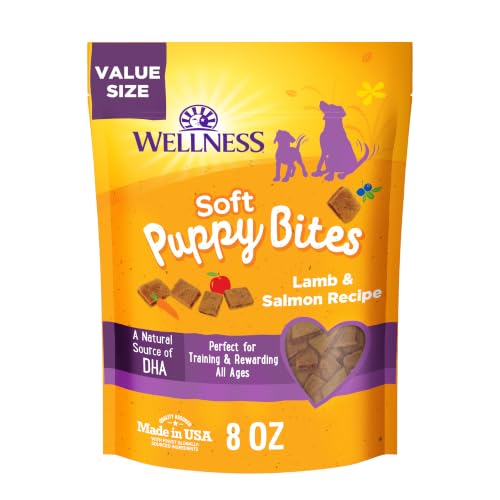
GRAIN-FREE PUPPY TREATS: These bite-sized, soft puppy training treats are the perfect reward during training sessions or any time you want to thank your dog for good behavior. Puppy bites contain 6 calories per individual treat!
Avoiding Punishment to Promote Trust
To build trust with an aggressive dog, it is crucial to avoid punishment-based training methods, as these approaches often lead to negative associations that can exacerbate aggressive behavior. Instead, focus on trust rebuilding through compassionate communication strategies.
- Understand Triggers: Identify what triggers your dog’s aggression, and address these without fear or pain.
- Positive Reinforcement: Use treats and praise to reinforce desired behaviors, creating positive associations.
- Stay Calm: Maintain a calm demeanor to reduce stress levels and promote a safe training environment.
- Consistency is Key: Be consistent in responses to behaviors to eliminate confusion.
Developing a Consistent Socialization Plan
Developing a consistent socialization plan is essential for any owner of an aggressive dog, as it lays the groundwork for positive interactions and ultimately helps to reduce aggressive tendencies. Here’s how you can build a solid framework:
- Socialization Schedule: Establish regular sessions that fit both your dog’s needs and your lifestyle.
- Gradual Exposure: Introduce your dog to social triggers from a safe distance, progressively decreasing proximity while rewarding calm behavior.
- Controlled Interactions: Arrange playdates with well-behaved dogs and conduct parallel walks to build tolerance.
- Safety First: Use equipment like muzzles if necessary, ensuring a controlled environment.
- Monitor Progress: Assess your dog’s behavior frequently, adjusting your plan based on their comfort levels and stress responses.
Implementing these structured components can foster trust and greatly improve your dog’s sociability.
Building Long-term Success in Aggressive Dog Socialization
Achieving long-term success in socializing an aggressive dog requires a thorough approach that integrates various techniques tailored to the individual dog’s needs. Building trust becomes essential, as does implementing gradual exposure to triggers. Here’s how to structure this:
- Trust Building:
- Establish a predictable routine to enhance your dog’s sense of security.
- Avoid punitive measures that can undermine trust.
- Start introducing triggers at a distance, rewarding calm behavior.
- Use parallel walks with a calm dog to normalize interaction.
- Reward non-aggressive responses consistently to reinforce desired behaviors.
- Consider professional guidance for customized programs focused on desensitization and counterconditioning.
These methods will create a foundation for sustainable behavioral change.
Frequently Asked Questions
Can Genetics Influence a Dog’s Aggressive Behavior?
Absolutely, genetics can play a huge role in a dog’s aggressive behavior. I’ve noticed that breed tendencies often reflect genetic predispositions, shaping how my dogs react in various situations. It’s a complex mix of nature and nurture!
At What Age Should I Start Socializing My Dog?
I believe starting puppy socialization as early as possible is essential. Early exposure from 3 weeks to about 14 weeks builds confidence and helps prevent future fear and aggression. It’s a beautiful journey we can share together!
How Long Does Socialization Take for Aggressive Dogs?
The socialization timeline for aggressive dogs can vary, but I’ve found that patience is key. Focusing on small, gradual steps really helps in tracking behavioral progress, leading to a more confident and relaxed pup over time.
What Are Signs My Dog Is Ready for Socialization?
Imagine a flower blooming after a storm—that’s how I see my dog’s readiness. When I notice relaxed body language and fewer stress signals, I know we’re on the right path to socialization.
Can Medications Help Manage Aggressive Behaviors During Training?
I believe medication types can really help manage aggressive behaviors during training. They support behavior modification by reducing anxiety and improving focus, making it easier for both of us to navigate those tough moments together.