


Service dogs and therapy dogs serve different functions. Service dogs assist individuals with disabilities by performing specific tasks, governed by the ADA, granting them public access rights. In contrast, therapy dogs provide emotional support in various settings, such as hospitals and schools, without the same legal protections. Training differs markedly too; service dogs focus on specialized skills while therapy dogs are trained for sociability. Understanding these distinctions is essential for proper support and effective use of both types of dogs. Explore further details below.
Key Takeaways
- Service dogs are trained to assist individuals with disabilities through specific tasks, while therapy dogs provide emotional support in various environments.
- Service dogs have legal access rights under the ADA, unlike therapy dogs, which lack the same recognition and access privileges.
- Service dog training focuses on specialized tasks, while therapy dog training emphasizes sociability and friendliness in therapeutic settings.
- Handlers of service dogs prioritize task performance, whereas therapy dog handlers aim to create comforting environments during visits.
- Misunderstandings about their roles can lead to confusion, as service dogs directly assist individuals, while therapy dogs support groups or facilities.
Definition and Primary Role
When it comes to understanding the difference between service dogs and therapy dogs, it is vital to recognize both their definitions and primary roles in society. A service dog, as defined by the Americans with Disabilities Act (ADA), is trained to assist individuals with disabilities through specific tasks like guiding the visually impaired or alerting individuals to medical emergencies. In contrast, the therapy dog definition encompasses animals that provide emotional support and comfort in various settings, such as hospitals or schools, without performing tasks related to a disability. While service dogs work directly to improve a person’s independence, therapy dogs focus on enhancing general well-being and fostering social interactions, making each essential yet distinctly different in their purposes and functions.
Training and Temperament
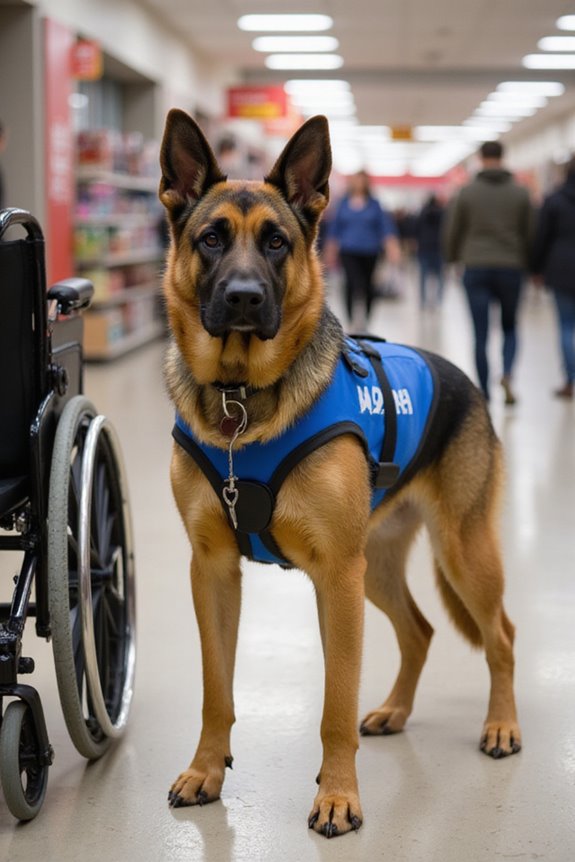
The training and temperament of service and therapy dogs play crucial roles in defining their effectiveness and suitability for their respective tasks.
- Service Dogs: These dogs undergo extensive training methods focused on specialized tasks, like guiding visually impaired individuals or alerting handlers to seizures. They require calmness, focus, and control, allowing them to assist their handler without distractions. Service dogs maintain a task-driven demeanor and restrict interactions unless necessary.
- Therapy Dogs: In contrast, therapy dogs are trained with a focus on behavioral traits, emphasizing friendliness and sociability. Their training is less rigorous, aimed at fostering comfort in various settings. They often seek out human interaction and physical touch, adapting easily to novel environments while displaying a non-aggressive temperament.
In both cases, a stable temperament is paramount for success.
Recommended Products


1.[Funny dog bandana for dogs]:The dog bandana is engraved: "service dog in training" is great gift idea for your furry pet,and give them as gifts to any dog lovers in your life.

Legal Status and Access Rights
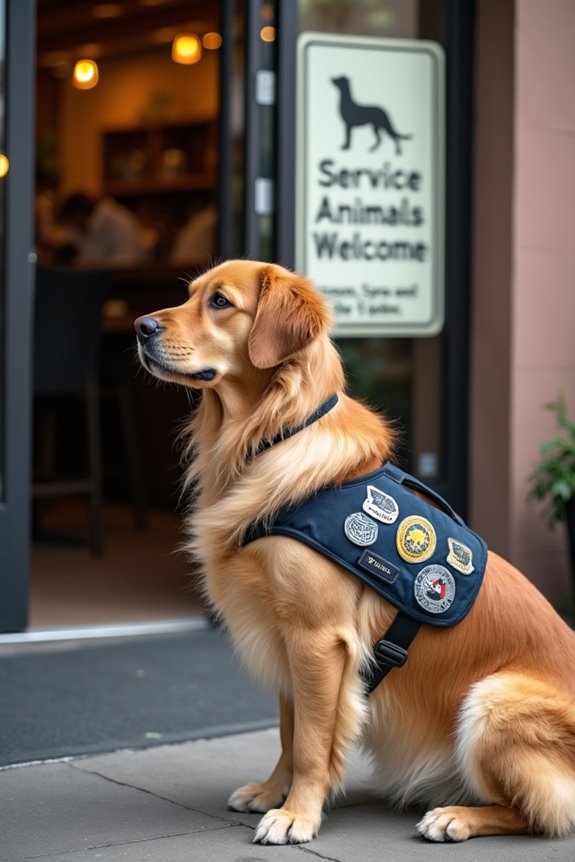
Intertwined with the roles that service and therapy dogs play in society are their distinct legal statuses and access rights, which can greatly affect their handlers’ experiences.
- Service Dogs: Legally recognized under the ADA, they provide public access to all areas where the public is permitted. Their tasks must directly assist those with disabilities.
- Therapy Dogs: They lack the same legal recognition and public access rights, typically only allowed in places where specifically invited, like hospitals or schools.
- Emotional Support Animals: Unlike therapy dogs, they may have some housing protections but do not hold service status under federal law.
Understanding these differences is essential as they impact daily interactions and mobility. It’s important for handlers to be aware of their rights and responsibilities.
Recommended Products

1.【Universal Fit For Easy Use】: You'll receive one Serice Dog Tag Sized (1.18 inches) , two "STRESS & ANXIETY RESPONSE Patch" Sized(3.15 x3.15 inches). It's super important to measure your pet's chest and back before buying. Lots of customers skipped this and got patches that were too long, leading to returns.

You Will Get: You will receive 50 pieces of service dog law cards. Sufficient quantity for your daily use and sharing.

KNOW YOUR RIGHTS UNDER THE ADA — 50 pocket-size cards laying out service dog handler rights and the law, so you're ready when questioned.
Handler Relationship and Use Cases
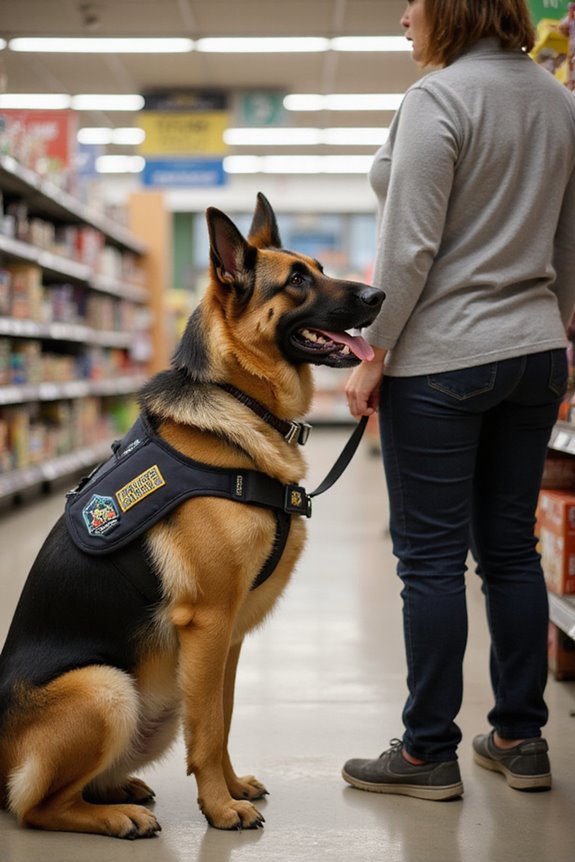
Understanding the distinctions in handler relationships and use cases for service and therapy dogs is important, especially considering the legal access rights previously discussed.
Handler Responsibilities
- Service Dog: My focus is on ensuring my dog performs specific tasks, like guiding me or alerting me to sounds, which are essential to my daily functioning. This requires me to maintain control and support our work as a team.
- Therapy Dog: I engage my dog in facilitating visits, creating a comforting environment. I must recognize when my dog needs a break or time to recharge.
Use Cases
- Service Dogs: They accompany me in public, constantly assisting with my daily life.
- Therapy Dogs: They visit hospitals or schools, providing emotional support, comfort, and affection to others.
Recommended Products

Sizing Guide – Large (Tactical): Large fits chest girth 20 - 34 inches, neck girth 19 - 25 inches. Measure with a soft tape, leave 1–2 fingers of space. Always check our size chart; size up if between measurements for a secure, comfortable fit.


PROFESSIONAL IDENTIFICATION & VERSATILE USE: Designed for working dogs, this service dog vest comes with metal SERVICE DOG tags, airtag protective covers, and removable service dog patches to clearly identify your companion. Whether you need a therapy dog vest, emotional support dog vest, or a service dog in training vest. It serves as a perfect service animal vest for daily duties, ensuring your ESA dog is recognized in public spaces.
Interaction and Socialization
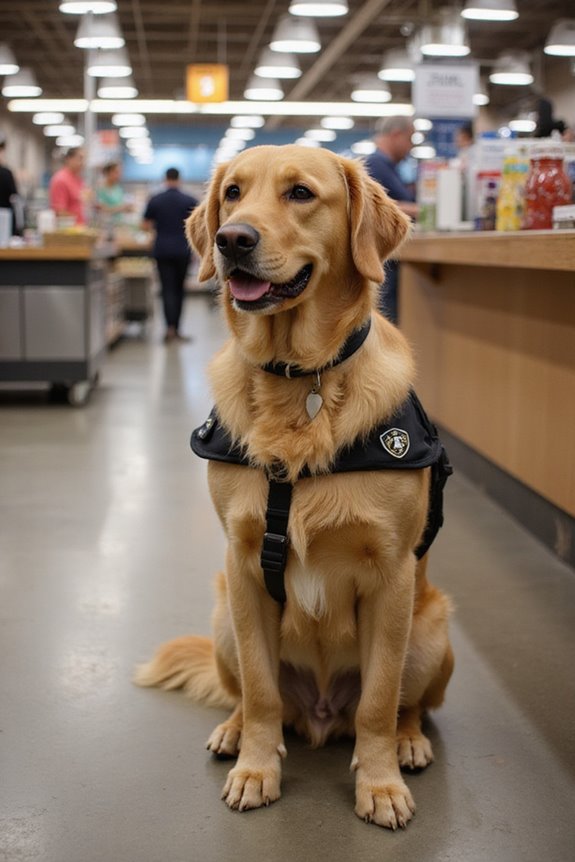
When considering interaction and socialization, it is crucial to recognize that service dogs and therapy dogs serve vastly different roles, with corresponding approaches to social engagement.
- Interaction Limits: Service dogs adhere to strict “no petting” policies, focusing solely on their handler’s needs. In contrast, therapy dogs engage freely, fostering emotional connections with a variety of individuals.
- Socialization Differences: Service dogs are socialized to remain calm and targeted on tasks, while therapy dogs thrive in diverse environments like hospitals or schools, promoting social interaction.
Certification and Registration
The distinctions in interactions and socialization are mirrored in the certification and registration processes for service and therapy dogs. For service dogs, certification processes require rigorous, specialized training tailored to specific disabilities. These dogs must demonstrate behavioral stability and task-specific skills, often evaluated through formal assessments by certified professionals.
In contrast, therapy dogs undergo less formal training focused on socialization and obedience, with certification depending on calm demeanor and friendly interaction. While therapy dog registration is voluntary, helping facilities verify their suitability, service dogs have inherent legal access rights under the ADA.
Recommended Products

【Train Like a Pro】Heouvo dog treat pouch and clicker kit are designed to help you train your dog like professionals. With easy access to your pet's favorite treats and a training clicker to supercharge your training sessions, you'll see better results in no time

Removable Zipper Pouch: Easily store and access your smartphone, keys, poop bags, dog treats in the removable zipper pouch. It’s a good add-on for the leash for training, walking, jogging, hiking training and running

HIGHLY VISIBLE MESSAGE - (1 Pack, In Training) Our 1.1 inch by 8 inch leash sleeves use a large format text font with highly visible contrasting colors to ensure your message can be easily seen from a distance.
Emotional and Psychological Benefits
Emotional and psychological benefits play an essential role in the effectiveness of both therapy and service dogs, as each type of dog serves specific purposes for their handlers and those they interact with.
- Therapy dogs provide emotional support, boosting morale and alleviating stress in healthcare and educational settings.
- They foster socialization and emotional responsiveness, enhancing mood and reducing feelings of loneliness.
- On the other hand, service dogs specifically assist individuals with disabilities, such as PTSD, resulting in considerable mental health improvements.
- Their presence promotes independence and security, ultimately reducing anxiety and psychological distress.
- Both types of dogs considerably impact emotional well-being, with therapy dogs offering broad community support while service dogs focus on the individual needs of their handlers.
Recommended Products

1. 【Perfect 25mm PTSD Dog Tag Size】 Our PTSD Tag are sized at 25mm. This compact dimension is ideal for attaching to your service dog's collar or harness. It offers a snug fit that's suitable for a variety of service dog breeds, ensuring it stays in place during their important work.

Service dog embroidered patches.

Size: Width 3 inches * Height 3 inches (measured from the widest and highest point). 100% fully embroidered.
Common Misconceptions
Understanding the differences between service dogs and therapy dogs is critical, particularly as misconceptions surrounding their roles can lead to significant misunderstandings.
Many people confuse service dogs, therapy dogs, and emotional support animals, thinking they share the same service definitions. Here are some common misunderstandings:
- Training: Service dogs don’t need to be professionally trained, though it’s often helpful. Therapy dogs focus on behavior in therapeutic settings.
- Rights and Access: Service dogs enjoy public access rights under the ADA, whereas therapy dogs do not.
- Purpose: Therapy dogs offer comfort in group settings, while service dogs assist individuals with disabilities.
It’s essential to clarify these misconceptions to appreciate the unique roles these animals play in our lives.
Frequently Asked Questions
Can Therapy Dogs Be Used in Schools or Workplaces?
Imagine a gentle cloud drifting into school environments, lifting hearts and minds. Therapy dogs bring joy, reduce anxiety, and nurture connections, embodying care and support. I’ve seen their benefits transform both classrooms and workplaces. It’s magical.
How Can I Find a Certified Therapy Dog?
If you’re searching for a certified therapy dog, I recommend exploring various therapy dog organizations. Look into their certification process and find one that aligns with your needs. It really helps simplify the journey!
Are There Breed Restrictions for Service or Therapy Dogs?
I’ve found that breed eligibility for service and therapy dogs can vary. While legal requirements protect service dogs from breed discrimination, therapy dogs face restrictions based on facility rules. It’s a nuanced topic worth exploring together.
What Additional Benefits Do Therapy Dogs Provide Compared to Service Dogs?
When I think about therapy dogs, I see how they provide emotional support and enhance social interaction. They bring comfort to many and create connections that brighten someone’s day, often in ways service dogs simply can’t.
How Do I Train My Pet to Become a Therapy Dog?
To train my pet as a therapy dog, I focus on obedience training and follow the certification process, making sure we’re comfortable in various environments. It’s a rewarding journey we’ll share together, strengthening our bond immensely.