


Dogs circle before lying down primarily due to instinctual behaviors rooted in their ancestry. This circling helps them create a safe, secure sleeping space, allowing them to assess their environment for potential threats. It also aids in temperature regulation and comfort, as dogs adjust their resting surface. Additionally, they may engage in territory marking through this behavior. Understanding these actions provides insight into your dog’s needs and emotional state, revealing a deeper connection to their evolutionary past.
Key Takeaways
- Dogs circle before lying down to create a safe, comfortable space, reflecting instincts from their wild ancestors.
- This behavior allows dogs to visually scan their surroundings for potential threats, ensuring safety before resting.
- Circling helps dogs mark their territory through scent, establishing boundaries and communication with other dogs.
- The action prepares dogs physically by adjusting their resting surface for comfort and temperature regulation.
- Monitoring circling behavior can indicate a dog’s health; excessive circling may suggest anxiety or other medical issues.
Ancestral Nest-Making Behavior
You may be interested
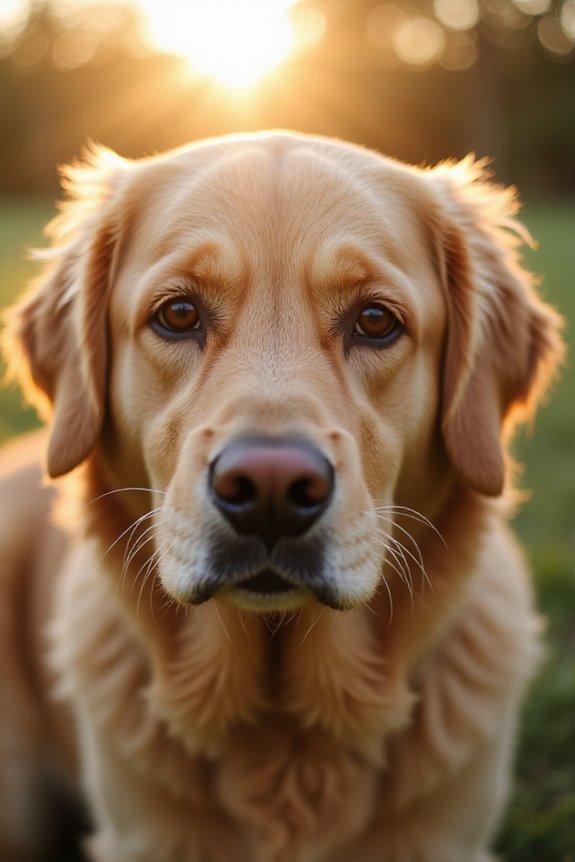

When we observe dogs circling before lying down, it’s important to understand that this behavior is rooted in their ancestral instincts, inherited from wild canids. These nesting rituals reflect an instinctual behavior designed to create a comfortable and secure resting spot.
- Nesting Behavior: Historically, dogs would flatten grass or leaves, smoothing the ground for warmth and protection.
- Territorial Marking: By circling, they also signal ownership using scent glands in their paws.
- Environmental Sensitivity: Changes in surroundings can intensify this behavior, showing their need for security.
While domestic dogs no longer need to create nests for survival, this vestigial behavior still imparts a sense of calm and comfort, allowing them to settle into a peaceful sleep amidst uncertainty.
Safety and Predator Awareness
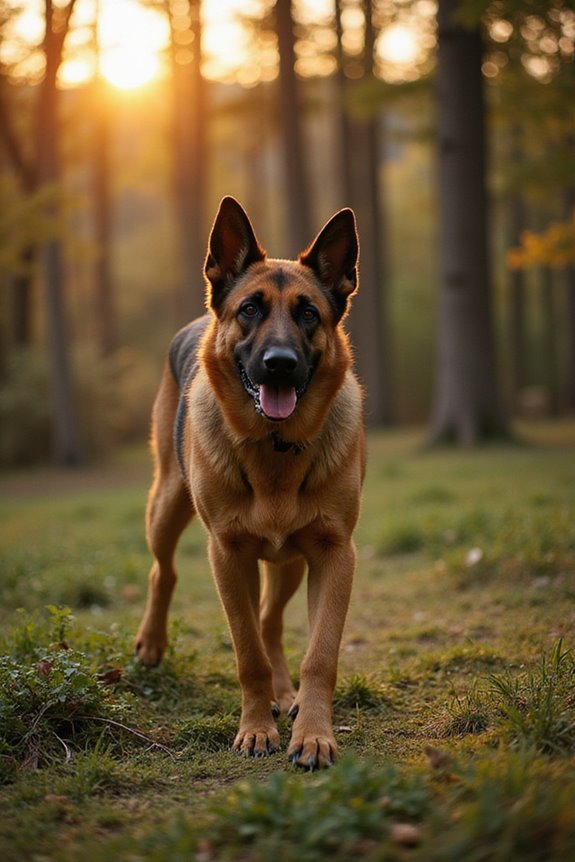
Circling behavior in dogs serves not only as a nesting ritual but also as a critical component of their safety and predator awareness. This instinctual practice involves safety scanning of their environment before resting. By making a full 360-degree turn, dogs visually survey potential threats from any direction, ensuring they spot risks such as predators.
- Wind Direction Awareness: Circling also allows them to determine wind direction, enhancing predator detection through smell. They can detect unseen hazards before being detected themselves.
- Final Alertness: This ritual enhances their alertness as dogs prepare to become vulnerable during sleep.
Ultimately, circling is a profound remnant of their ancestry, reflecting their instinctual drive to stay safe from predators in their environment.
Territory Marking and Communication
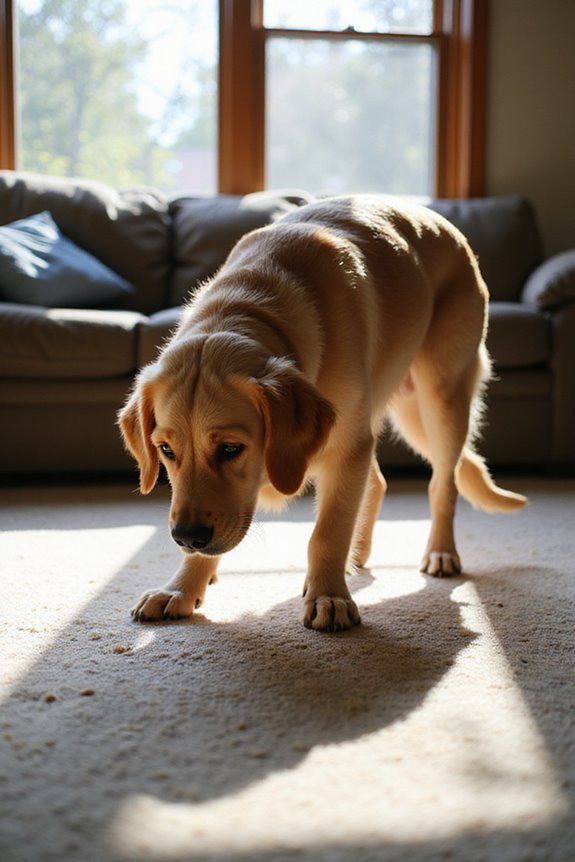
Understanding a dog’s circling behavior reveals important insights into their instinctual need for territory marking and communication. When dogs circle, they’re engaging in a form of territorial signaling, activating scent glands in their paws that help them mark their resting spot. This behavior isn’t merely instinctual; it’s linked to their social hierarchy.
- Scent distribution: Scratching the ground leaves both visible and olfactory markers.
- Communication: Urine and pheromones left behind convey information about reproductive status and rank.
- Reinforcement: Circling before lying down serves as a ritualistic seal, asserting their claim to a space.
Ultimately, through this behavior, dogs establish boundaries and communicate their presence, enhancing social cohesion while minimizing potential conflicts.
Recommended Products

ENHANCED WITH GRASS SCENT - Pee pads provide outdoor-trained dogs an indoor potty with a familiar scent

ENHANCED WITH GRASS SCENT - Pee pads provide outdoor-trained dogs an indoor potty with a familiar scent

● CARBON ODOR ELIMINATION: Our training pads are infused with activated carbon that physically absorbs and captures odor-causing compounds to eliminate smells at the source without the need for fragrances
Comfort and Physical Preparation
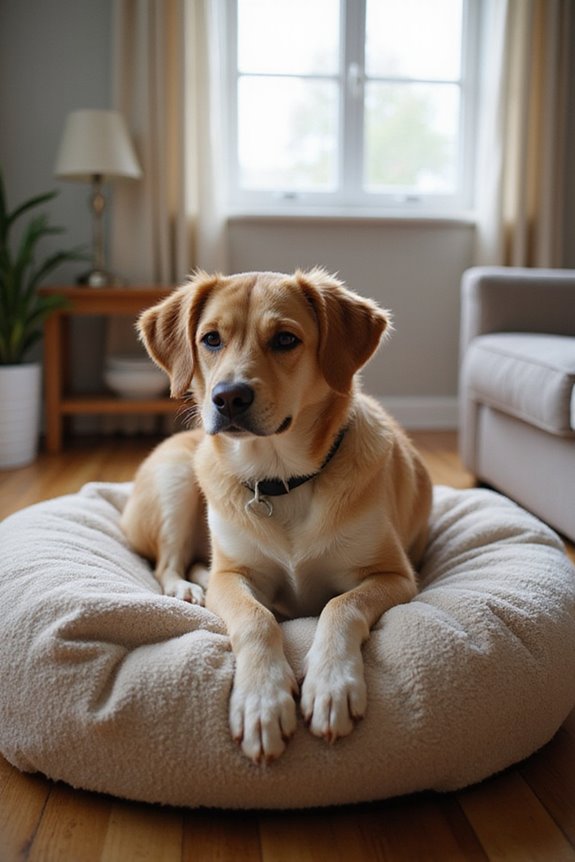
The behavior of circling before lying down serves multiple purposes related to comfort and physical preparation for dogs. This ritual involves a comfort assessment, where dogs pat down grass or bedding, ensuring an even and soft surface for rest. During this process, they adjust materials to their preferred firmness and smooth out any temperature discrepancies.
Circling also activates muscles and joints, prepping their bodies for relaxation. It aligns their posture to reduce pressure on joints, enhancing circulation. Furthermore, this movement allows them to avoid discomfort from lumps or irritants, while also checking for environmental factors like drafts. Ultimately, circling is a crucial change that prepares them both mentally and physically for a restorative sleep.
Recommended Products

Orthopedic Support: Our orthopedic dog sofa is designed to give your pet unparalleled support for a deep, dreamy sleep. High-density egg-crate foam helps distribute weight evenly and provides the perfect amount of pressure relief and joint support.

Polyurethane Foam: The EHEYCIGA orthopedic dog bed features memory foam and egg crate foam to provide even support and pressure relief. It offers a good balance of softness and support, making it particularly suitable for elderly dogs to alleviate joint pressure.
MEMORY FOAM: The EHEYCIGA orthopedic dog bed features memory foam and egg crate foam to provide even support and pressure relief. It offers a good balance of softness and support, making it particularly suitable for elderly dogs to alleviate joint pressure.
Evolutionary and Neurological Factors
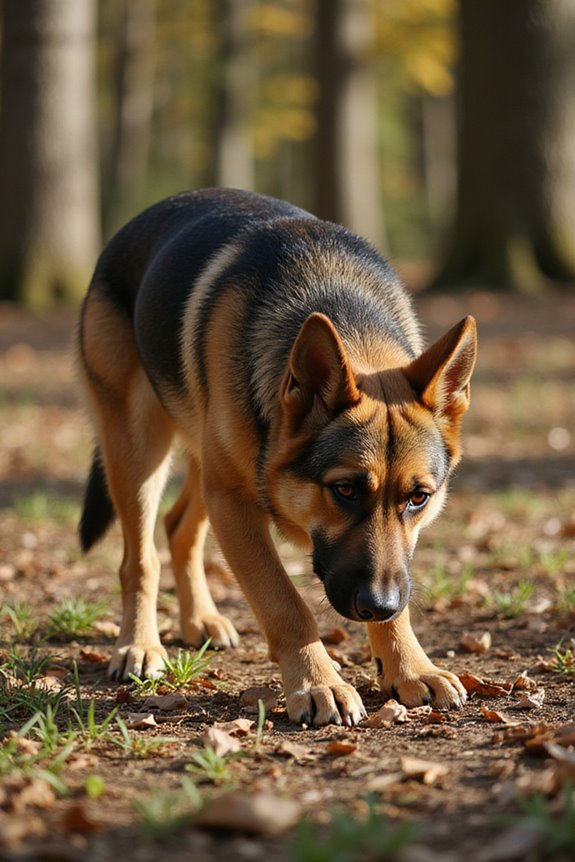
While many dog owners may overlook circling behavior as mere habit, it actually serves a significant evolutionary purpose grounded in instinctual responses and neurological pathways. This behavior traces back to wild canines, primarily wolves, where circling provided essential benefits for evolutionary survival.
- Environmental Assessment: Dogs circle to evaluate their surroundings, detecting potential threats and positioning themselves appropriately.
- Ground Preparation: This instinctual action flattens vegetation, making a cozy resting place while marking territory.
- Neurological Pathways: Circling taps into hardwired neural circuits related to spatial awareness, enhancing motor control and reducing anxiety, ensuring a secure posture.
Understanding these aspects can deepen our appreciation for our dogs’ behaviors, revealing layers tied to their ancestry and instinctual wisdom.
Health and Behavioral Considerations
Circling before lying down serves not just an instinctual purpose, but it can also provide insights into a dog’s health and behavior. Healthy dogs circle to make comfort adjustments, relieving pressure points before resting. However, excessive circling may be a red flag, indicating anxiety indicators or even underlying neurological conditions.
Consider these signs:
- Frequent, aimless, or compulsive circling could signal cognitive dysfunction, particularly in older dogs.
- Changes in circling patterns might reflect mobility issues like joint pain.
- Dogs exposed to stressful environments may circle repeatedly as a coping mechanism.
Monitoring your dog’s circling behavior is essential for identifying any health concerns early. If you notice changes, it’s important to consult a veterinarian for proper evaluation and guidance. Regular use of joint supplements can also significantly enhance a dog’s mobility and overall comfort.
Recommended Products

Health Supplement for Dogs: VetIQ hip and joint chews for dogs are soft and a great way to support mobility, whether they love running, jumping, playing, or resting; They suit senior pets or those who need extra support staying active & comfortable

Joint Health Supplement for Dogs: Cosequin is the #1 vet recommended retail joint health supplement brand, supporting joint health in dogs for over 25 years

PREMIUM JOINT SUPPORT: These dog hip and joint supplement chews deliver essential Glucosamine Chondroitin duo to promote joint health across all dog breeds
The Role of Instinct in Modern Dogs
Understanding canine behavior involves recognizing the innate instincts that shape modern dogs. Our furry companions carry with them a legacy of instinctual memory, inherited from ancestors like wolves and wild dogs. Circling before lying down is an instinctive action deeply rooted in their genetic predisposition, designed for safety and comfort.
This behavior helped ancient canines create secure resting spots while checking for potential dangers in their surroundings. Although domestication has altered many behaviors, these primal instincts remain evident, reinforcing the bond between dogs and their wild heritage.
Just as they once adapted to survive in the wild, today’s dogs retain these behaviors, reminding us of their evolutionary journey and the survival skills that continue to influence their actions.
Differences Across Breeds
When exploring the differences in circling behavior among various dog breeds, it’s crucial to recognize how deeply rooted instincts and genetics influence each dog’s unique actions.
- Breed Variations: Herding breeds like Border Collies circle frequently, reflecting their instinct to manage livestock. In contrast, companion breeds often show less pronounced circling habits, likely due to selective breeding.
- Circling Frequency: Working and hunting breeds, such as Retrievers, may circle to guarantee safety before resting, demonstrating their protective instincts.
- Behavior Patterns: Factors such as limb length or anxiety levels can affect the circling intensity. For example, agile breeds may circle elaborately, while stockier breeds might circle less.
Understanding these breed-specific tendencies enriches our bond and helps tailor our care accordingly.
Recommended Products
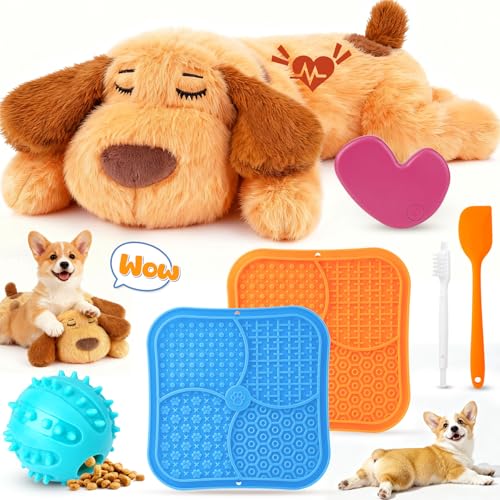
All-in-One Calming Kit:Includes 1 heartbeat puppy toy, 2 dog lick mats, 1 treat ball, 1 scraper & 1 brush. Combines soothing, separation anxiety relief and behavioral training,perfect for new home adjustment, bedtime, or alone-time calm

ULTRA SOFT FLUFFY PLUSH SURFACE - EHEYCIGA dog bed made of fluffy and smooth faux fur fabric, which is very soft and comfortable. This fluffy dog bed will provide dogs with soft touch and make them feel secure.

【Designed for small to medium dogs】 Lalolee Dog Crate lick mat for Designed for small to medium dogs. Can distract the dog when you leave the house (the first 20 minutes is when the dog feels the most separation anxiety) If they are distracted, they won't have separation anxiety.
Observing and Understanding Your Dog’s Behavior
Observing your dog’s behavior can reveal much about their well-being and personality, particularly through actions like circling before they lie down. This behavior isn’t just cute; it’s rooted in instincts. Here are some key insights:
- Territorial Marking: Circling may establish a safe sleeping area.
- Comfort and Nesting: This action helps dogs arrange their bedding for comfort.
- Causes for Concern: Excessive circling may signal discomfort or stress.
- Behavioral Patterns: Dogs showing regular circling exhibit a sense of security in their environment.
Recommended Products

Oprah Daily Award-Winning Comfort:Recognized by Oprah Daily as the perfect donut dog bed for curl-up sleepers, this round calming pet bed is loved for its extra-fluffy faux fur, raised rim for furry heads, and cozy design that blends seamlessly into any home. Petite sizes (XS–M) are fully machine washable for added ease.

Oprah Daily Award-Winning Comfort:Recognized by Oprah Daily as the perfect donut dog bed for curl-up sleepers, this round calming pet bed is loved for its extra-fluffy faux fur, raised rim for furry heads, and cozy design that blends seamlessly into any home. Petite sizes (XS–M) are fully machine washable for added ease.

Cradled Comfort & Support: This orthopedic dog bed is built with CertiPUR-US certified egg crate foam that conforms closely to your dog's body, delivering soft yet supportive cushioning to help dogs relieve joint and muscle pressure. Designed to offer optimal orthopedic comfort and help dogs to seek deeper sleep, especially suitable for senior dogs with anxiety and large dogs with arthritis.
Frequently Asked Questions
Is Circling Behavior More Common in Certain Dog Breeds?
I’ve noticed that circling behavior is indeed more common in certain breeds. It seems linked to those instinctual behaviors shaped by breed tendencies, which can make each dog’s quirks feel so uniquely endearing and familiar.
Does Circling Behavior Change With Age in Dogs?
As dogs age, I’ve noticed circling behavior shifts. While puppy circling seems playful, senior circling often signals cognitive changes or anxiety. Observing this progression truly highlights the deep bond we share with our furry companions.
Can Circling Indicate a Dog’S Emotional State?
When my dog circles, it’s like watching a dance of comfort seeking. Those anxious signals whisper of emotions he’s grappling with. I can’t help but feel that circling reveals more than just rest—it’s his hidden world.
How Can I Reduce Excessive Circling in My Dog?
To reduce my dog’s excessive circling, I’ve started using training techniques and behavioral modification strategies. It’s helped create a calmer environment, which I believe has made a noticeable difference in her overall comfort and well-being.
Are There Specific Environments That Trigger More Circling Behavior?
Imagine a dance on unfamiliar ground; my dog’s instinctual behavior flourishes in every new environment. Environmental triggers like rough terrain or temperature shifts ignite an ancient routine, ensuring comfort and security as he prepares to settle.