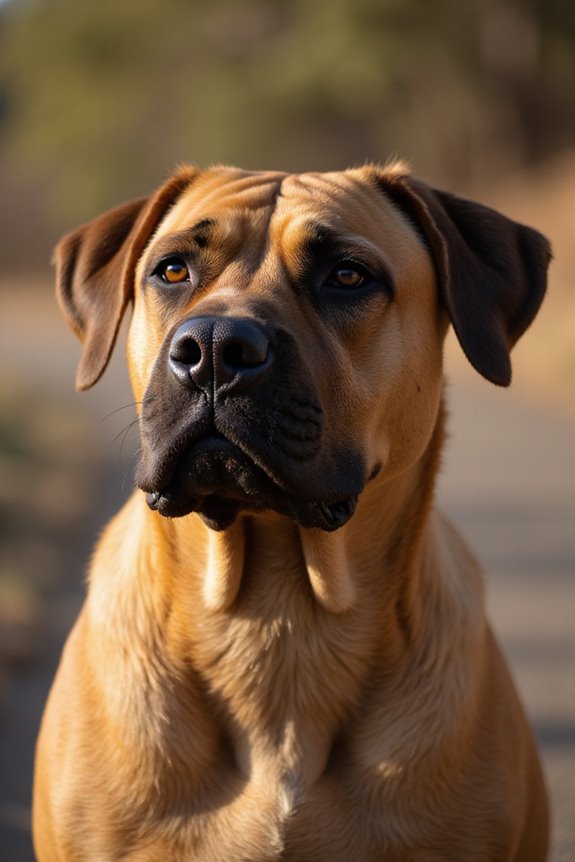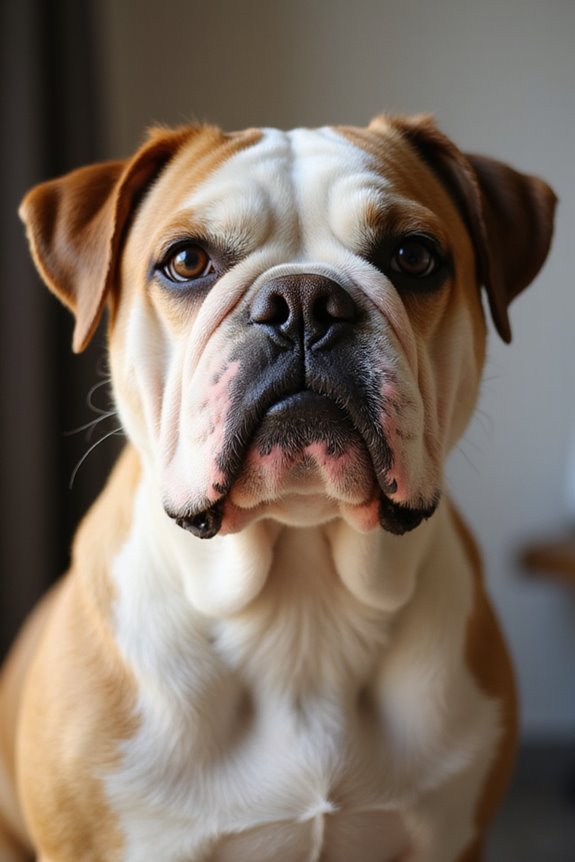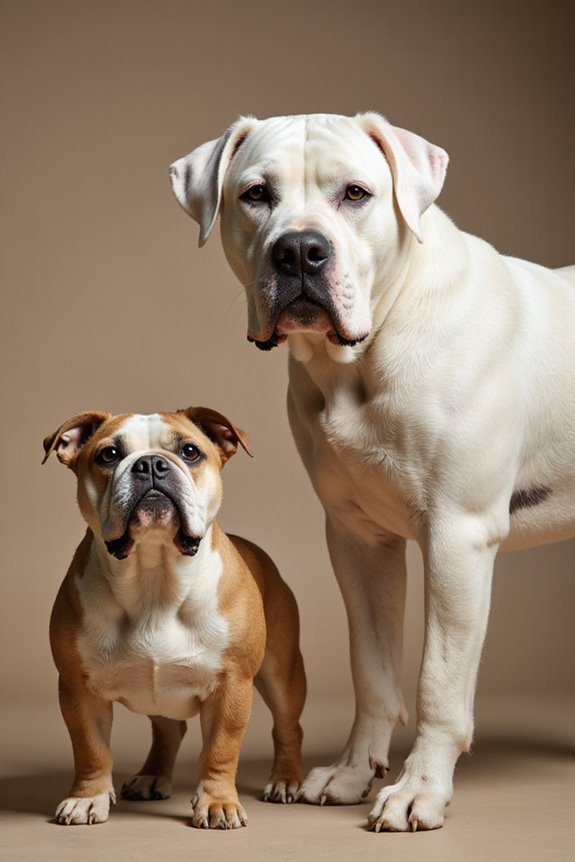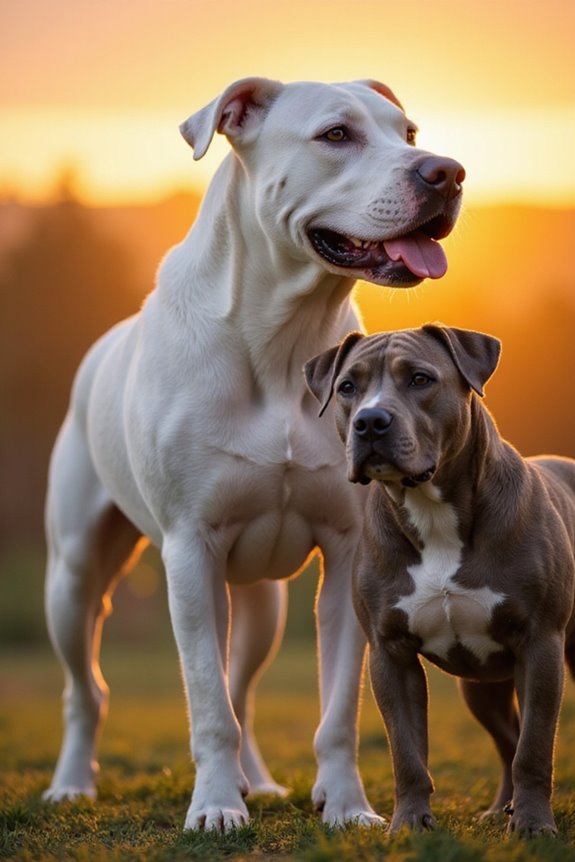
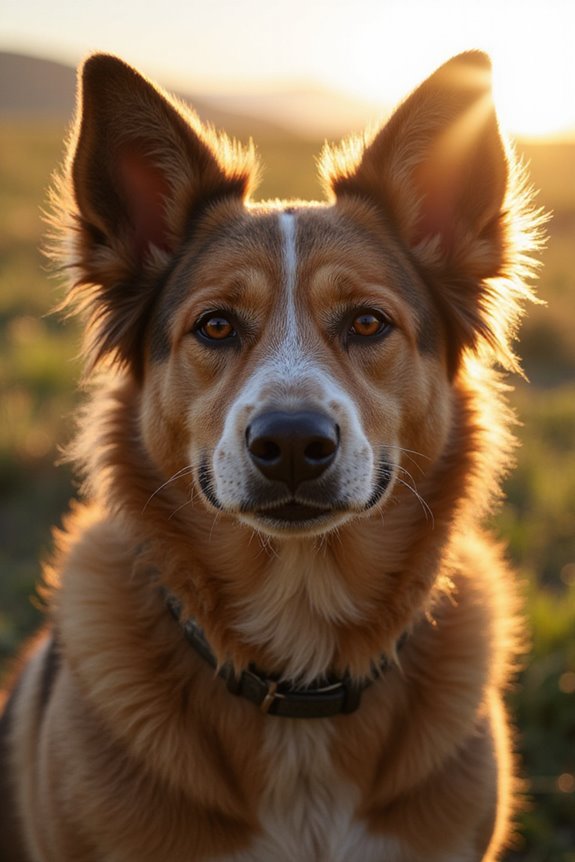

The Argentine Pampa Dog is a rare breed from South America, known for its hunting flexibility and loyalty. With a medium build, it stands 47 to 59 cm tall and weighs around 20 kg. The breed is characterized by its short coat, typically white with markings. This dog thrives on daily exercise and socialization, making it a devoted family companion, particularly with children. Understanding its unique traits can provide deeper insights into this historically significant breed.
Key Takeaways
- The Argentine Pampa Dog is a medium-sized, agile breed with a short, dense coat ranging from pure white to leonine fawn, often with markings.
- This breed originated in the Pampas of Argentina, valued historically for hunting, livestock management, and home defense.
- Known for their loyalty and affectionate nature, particularly towards children, they require early socialization and daily exercise for a balanced temperament.
- Unlike the more recognized Dogo Argentino, the Pampa remains a rare and unstandardized breed, primarily found in Argentina, Paraguay, and Uruguay.
- Conservation challenges exist due to crossbreeding, impacting breed purity and increasing the importance of preserving this indigenous South American dog.
Origin and History of the Argentine Pampa Dog
You may be interested
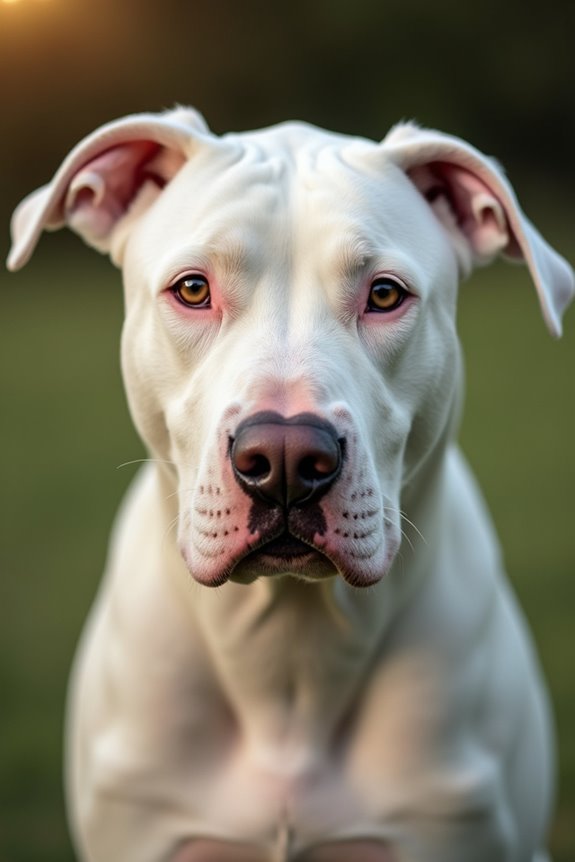
The Argentine Pampa Dog, also known as the Pampas Deerhound, has origins that are largely obscure, making its history intriguing yet somewhat elusive. This breed emerged in the vast Pampas of Argentina, where it served essential cultural significance for local communities.
- Early users valued its flexibility in hunting techniques, primarily employing it for tracking deer and small game.
- Unlike the Dogo Argentino, which underwent intentional breeding, this dog evolved naturally, reflecting diverse influences from various native working breeds.
Its stamina and agility not only supported hunting but also helped manage livestock and defend homesteads. Although it remains relatively rare today, understanding its roots offers insight into a unique relationship between people and dogs shaped by necessity and environment.
Physical Characteristics of the Breed
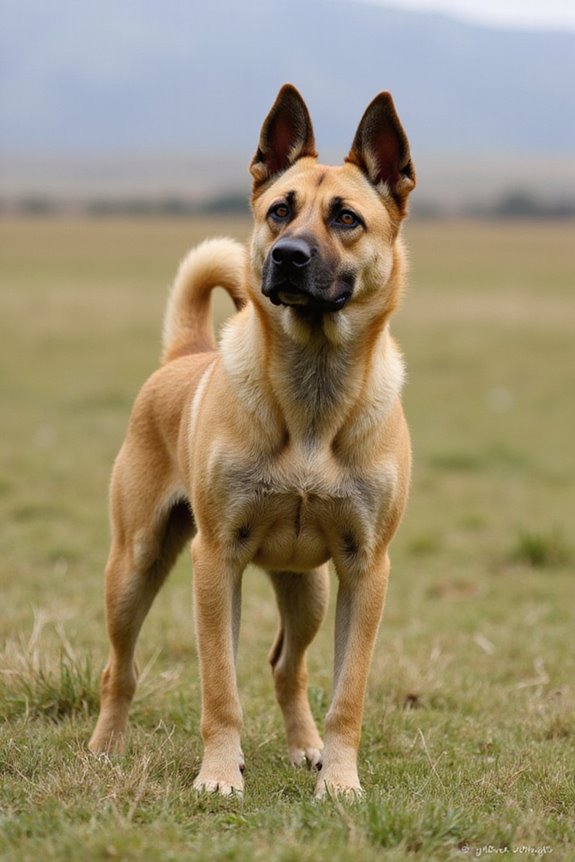
When considering the physical characteristics of the Argentine Pampa Dog, it’s essential to recognize its unique build and features that have evolved to meet the breed’s functional needs. This medium-sized breed typically ranges from 47 to 59 cm in height and weighs around 20 kg, exhibiting size variations influenced by bloodlines. They possess a muscular, agile physique, ideally suited for hunting and guarding.
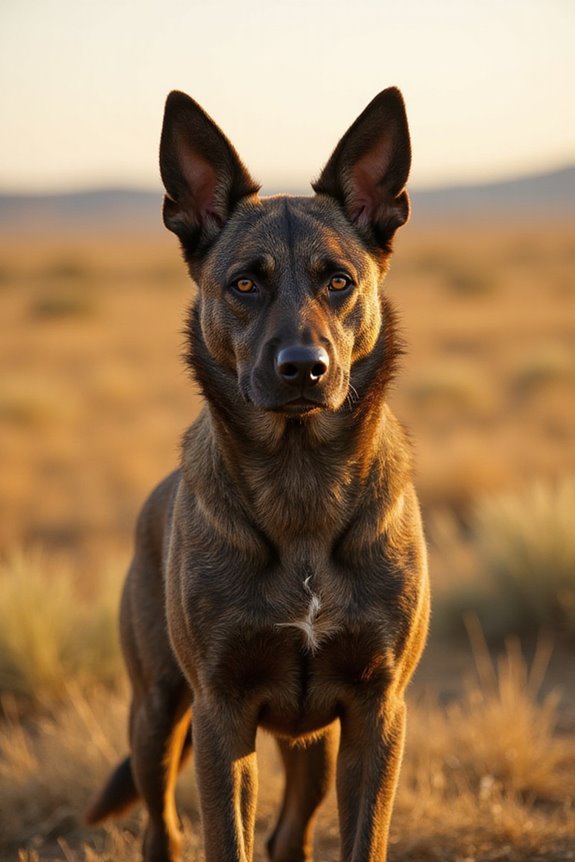
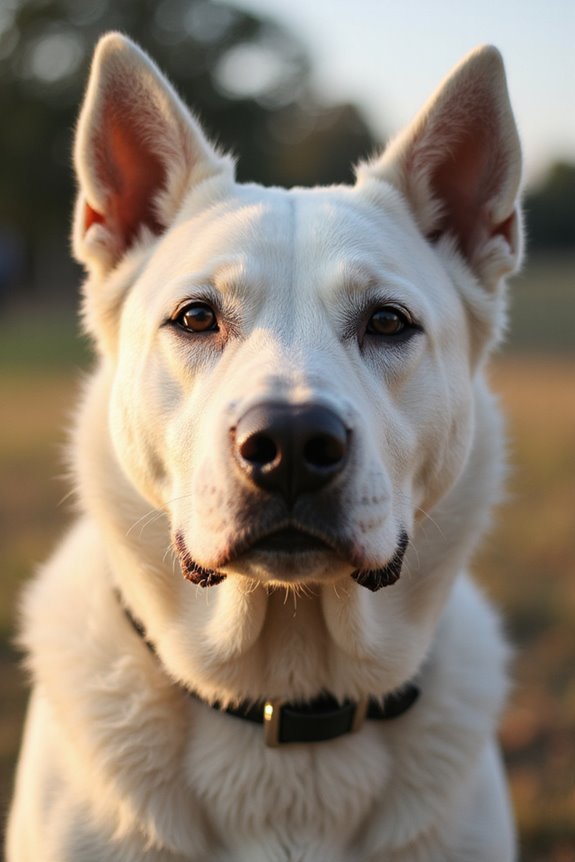
Their short, dense coat boasts colors from pure white to leonine fawn, often marked with patches. The most common coloration is white, complemented by markings on the neck, chest, and legs. These distinct physical traits enhance their expressiveness and guarantee adaptability to the Argentine Pampa’s temperate climate, blending speed, endurance, and power seamlessly.
Recommended Products

DUAL-SIDED DESIGN: Our Undercoat Rake Dog brush is perfect for deshedding your pet's coat. Designed with a dual-sided design, start with a 9-teeth side to tackle stubborn mats and tangles, and finish with a 17-teeth side to thin out and deshed after.

【Skin-friendly Massage Needles】 The mental pins on the slicker brush for dogs have round protective plastic tips on the ends. As a cat brush and dog dogs, it's perfect for shedding and massaging your pets without scratching your pet's skin, even the sensitive skin.

One of the best dog brushes on the market, It has a double row of stainless steel pins/teeth to reduce pulling the coat without damaging it or hurting your pet. It is a very gentle experience for your dog, cat, rabbit, or any other furry friend that needs brushing.
Temperament and Behavior Patterns
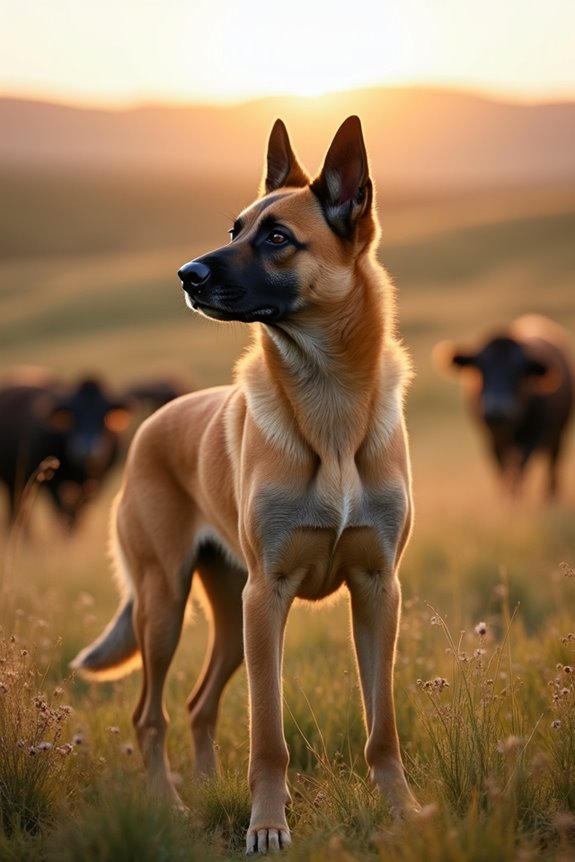
Understanding the temperament and behavior patterns of the Argentine Pampa Dog is essential for anyone considering adding this breed to their family. These dogs exhibit strong loyalty traits, forming close bonds with their human family members. When properly socialized, they are affectionate, especially with children. Their intelligence and willingness to please make training easier, but they require consistent mental challenges.
In terms of exercise needs, a daily regimen of at least one hour is vital to keep them physically and mentally stimulated. Without adequate activity, they may resort to destructive behaviors. Early socialization is imperative to moderate their natural protective instincts and promote a well-rounded, friendly disposition. With the right guidance, they can be both affectionate companions and effective guardians.
Recommended Products

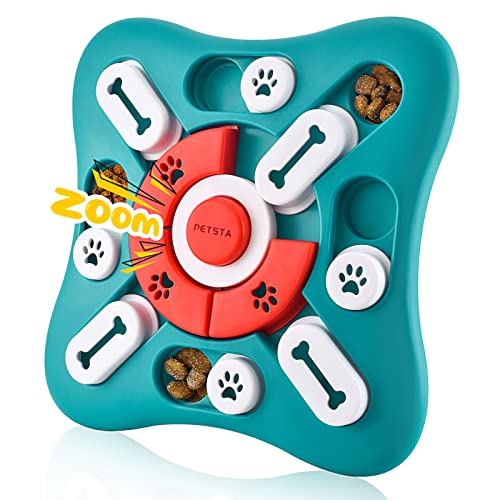
【Upgrade Dog Puzzle】Our dog puzzle toy is moderate level with more challenging ,difficult than level 2, not only easy slide steps, but require your dog's ability to learn sequential steps and combinations to seek hidden treats while keeping mental active .There are easy slide step and harder step in the puzzle box , dogs have to find a right way to move the red round sliders and the center parts for food, higher skills and mind required , great for the smart dogs.

SUITABLE FOR SMALL AND MEDIUM DOGS, CATS - The size of this snuffle mat is 26 x 16.5 inches, which is perfect for small dogs, medium dogs, cats and rabbits. It makes a wonderful gift for pet owners! NOT recommended for extra large and aggressive chewers dogs who could tear it up
Relation to the Dogo Argentino
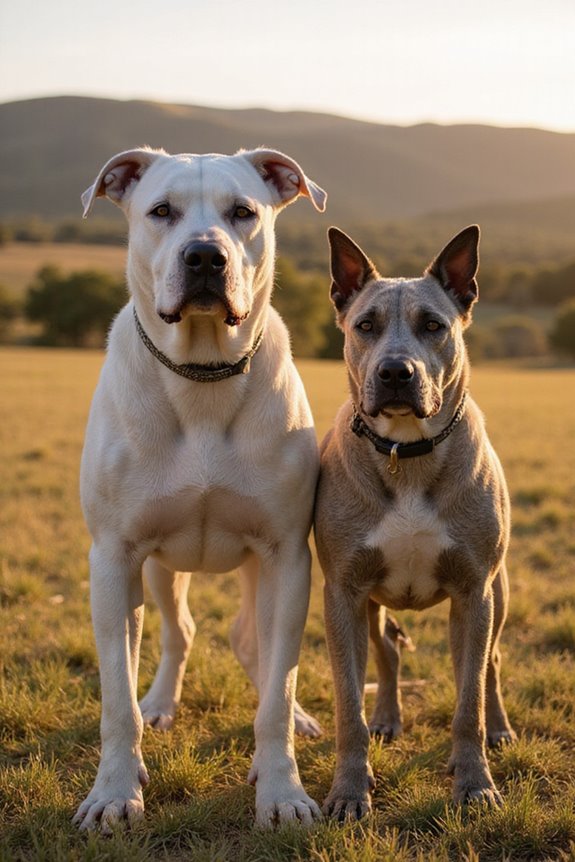
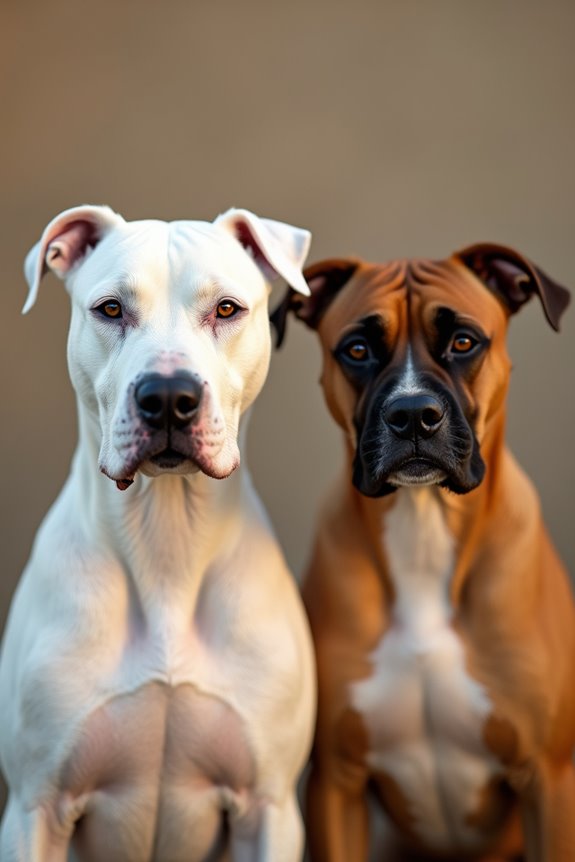
Examining the Argentine Pampa Dog’s attributes reveals essential contrasts with the Dogo Argentino that potential owners should be aware of. In a Dogo Argentino comparison:
- Purpose and Origin: The Dogo was specifically bred for hunting big game, while the Pampa is a traditional landrace dog tailored for rural life.
- Physical Traits: The Dogo is muscular and standardized; the Pampa exhibits a variety of sizes and coat types.
- Behavior: Dogo Argentino requires experienced handling due to aggressive tendencies, whereas the Pampa is generally easier to manage.
Moreover, breed recognition plays a vital role; the Dogo Argentino enjoys formal acknowledgment by various kennel clubs, enhancing its popularity and status. In contrast, the Pampa lacks such official validation, affecting its visibility among prospective pet owners.
Recommended Products

USAGE GUIDELINES & IMPORTANT NOTES: For best performance, replace the pad regularly based on your pet’s size and usage (recommended every 1–2 uses for small dogs, more frequently for large dogs). Do not pour large amounts of liquid at once to test absorption, as this does not reflect real use conditions. Avoid stacking multiple pads, as this may block proper liquid distribution and reduce absorption efficiency. Use only on the quilted (top) side, and place the pad on a flat, even surface to prevent leakage.

ENHANCED WITH GRASS SCENT - Pee pads provide outdoor-trained dogs an indoor potty with a familiar scent

SUPER ABSORBENT PUPPY PADS: 5-layer protection locks in up to 6 cups of liquid. Each XL pad measures 36" x 28", offering more coverage than standard-sized puppy pads for puppies, large dogs, and multi-pet homes.
Rarity, Distribution, and Health Considerations
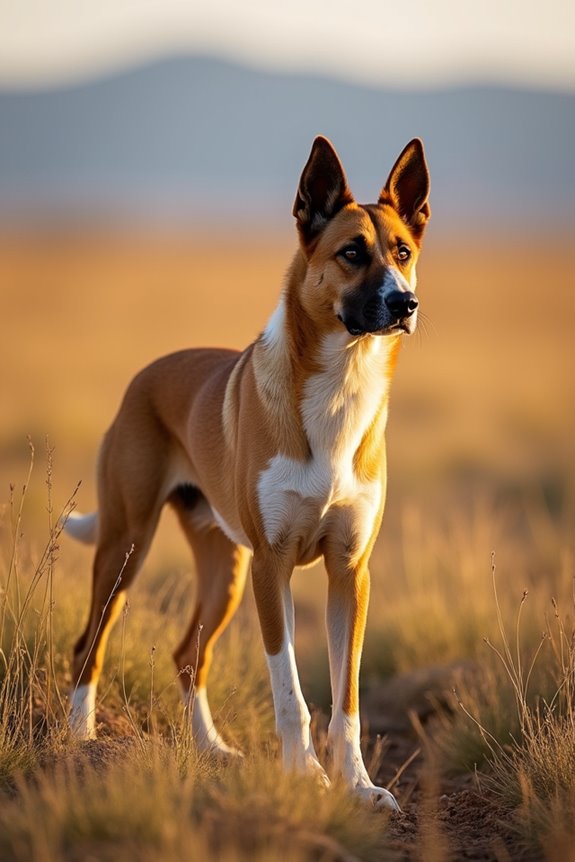
While the Argentine Pampa Dog is recognized primarily as a rare breed indigenous to South America, its rarity, geographic distribution, and health considerations are significant factors for prospective owners.
Rarity and Distribution
- This breed is mainly found in Argentina, Paraguay, and Uruguay, particularly in the Buenos Aires area.
- It’s largely recognized for its limited population and increased popularity as a guardian and fighting dog.
Health Considerations
- Prospective owners should be aware of the mixed genetic background, which may result in inherited conditions seen in related breeds.
- Experienced handling is vital due to its powerful nature.
Breeding Practices
- Current conservation efforts face challenges in maintaining breed purity amid common crossbreeding practices between variants.
- Careful management of health needs and behavioral traits is significant for responsible ownership.
Recommended Products

GENTLE, EFFECTIVE CONTROL – Patented humane design helps discourage leash pulling and reinforce obedience with gentle correction.

GENTLE, EFFECTIVE CONTROL – Patented humane design helps discourage leash pulling and reinforce obedience with gentle correction.
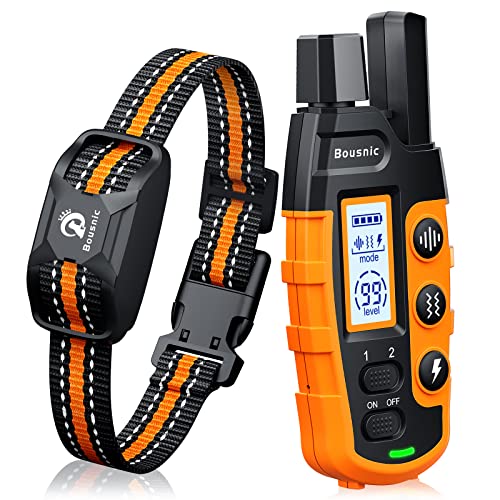
Humane and Safe, Eliminate Bad Behavior Effectively: Bousnic Dog shock collar features 3 humane training modes with adjustable beep(1-8 levels), vibration(1-16 levels), safe shock(1-99 levels). It helps your unruly and hard-headed dogs learn to be a better part of your household.
Frequently Asked Questions
What Is the Typical Lifespan of an Argentine Pampa Dog?
The typical lifespan of an Argentine Pampa Dog is around 10 to 12 years, influenced by factors like health issues and care. With proper attention, I believe they can enjoy a longer, happier life.
How Much Exercise Does an Argentine Pampa Dog Need Daily?
Imagine running alongside my dog in the sun; those daily exercise requirements call for 60 to 90 minutes of activity. We thrive on walks, fetch, and play—it’s our special time that bonds us deeply.
Are Argentine Pampa Dogs Good With Children?
I’ve found that Argentine Pampa dogs can be great with children, enhancing family dynamics. Their social behavior is sweet and playful, but it’s essential to supervise interactions, ensuring patience and nurturing for a harmonious bond.
What Training Methods Work Best for Argentine Pampa Dogs?
You won’t believe how much fun training my Argentine Pampa can be! I swear by positive reinforcement and socialization techniques; they transform our sessions into joyous adventures rather than mundane chores, strengthening our bond beautifully.
Can Argentine Pampa Dogs Adapt to Apartment Living?
Yes, Argentine Pampa Dogs can adapt to apartment living. Their temperament traits, like loyalty and calmness, help. With regular exercise and affection, they thrive even in smaller spaces, bringing joy to our cozy homes.