


When comparing the Dogo Argentino to the leopard, it is crucial to acknowledge their stark differences. The Dogo Argentino is a domesticated breed, loyal and protective, originally bred for hunting big game in Argentina. In contrast, the leopard, as an apex predator, relies on stealth and agility, showcasing solitary behaviors. Their physical sizes reflect different adaptations: the Dogo ranges from 80-100 pounds, while leopards can weigh between 70-150 pounds. Understanding their unique traits is essential for recognizing their roles in nature. Further insights await.
Key Takeaways
- Dogo Argentinos are domesticated hunting dogs, bred for strength, while leopards are wild apex predators evolving for survival in diverse environments.
- Dogo Argentinos display cooperative social behavior in packs, contrasting with the solitary nature of leopards that mark and defend territorial boundaries.
- While both species possess significant strength, Dogo Argentinos focus on direct aggression, whereas leopards use stealth and ambush tactics for hunting.
- Dogo Argentinos typically require experienced owners for proper socialization to handle their protective instincts, unlike leopards that need vast wild territories.
- Leopards are crucial for ecological balance as predators, while Dogo Argentinos serve as loyal companions and protectors for families in domestic settings.
Physical Attributes and Size Comparison

You may be interested



When comparing the physical attributes and size of the Dogo Argentino and the leopard, it’s essential to examine several key factors, including height, weight, and body length.
- Height: Dogo Argentinos stand at 24-27 inches for males and 24-25.5 inches for females, while leopards average 27-30 inches at the shoulder.
- Weight Comparison: Dogo Argentinos typically weigh 80-100 pounds, whereas leopards can range from 70-150 pounds.
- Body Length: Dogo Argentinos generally have a body length slightly longer than their height, contrasting with leopards, which have a lean and flexible spine enabling agility.
Understanding these size dimensions can help you appreciate the unique attributes of each animal in a domestic versus wild context.
Fighting Abilities and Combat Tactics
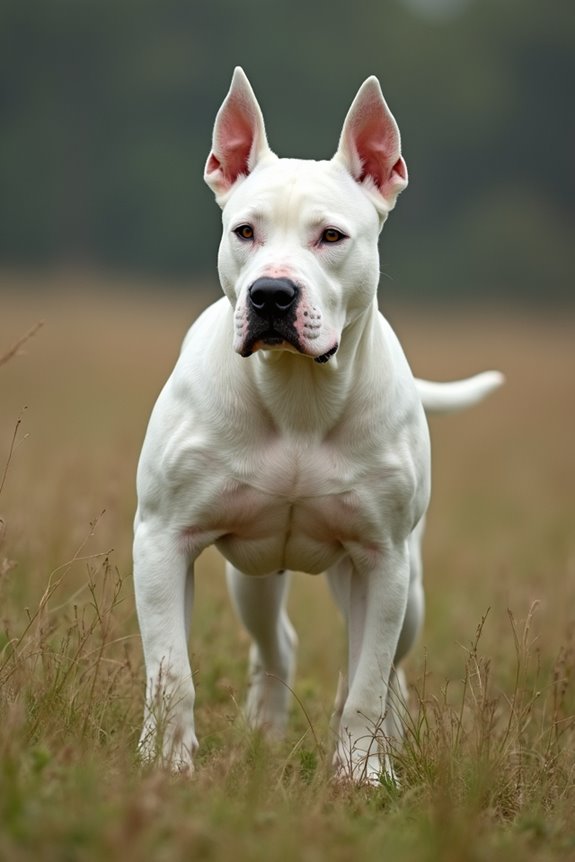
Fighting abilities and combat tactics differ considerably between the Dogo Argentino and the leopard, as each species has evolved distinct skills suited to its environment and lifestyle. The Dogo Argentino employs direct aggression in its fighting style, relying on significant bite force and endurance to pursue and wrestle down prey. Its tactical approach is straightforward, emphasizing strength and durability.
In contrast, leopards utilize stealth and ambush tactics, leveraging agility and precision in their attacking strategies. Their fighting style focuses on targeting crucial areas with a combination of bites and claws, allowing rapid incapacitation of their prey. Understanding these differences highlights how each predator adapts its combat tactics based on its natural habitat and role within the ecosystem.
Recommended Products

Hard-wearing Material: Our durable dog training wedge is made of high quality jute and linen material, design well constructed, which come with double stitching. It can not only withstand strong pulling force,but also strengthen the biting ability of the dog's teeth when you training your dog

PROFESSIONAL TRAINING SET: Includes dog bite sleeve, training stick, tug-of-war toy and chew ball to help improve your dog's bite and obedience, a professional tool for large dog training, police K9, Schutzhund and circuit sports

INTERACTIVE PLAYTIME - This bite pillow is a valuable training tool for obedience, agility, and other activities; It helps build prey drive, improves focus, and strengthens the bond between you and your dog, making training sessions more effective and enjoyable
Behavioral Differences: Wild Vs Domestic
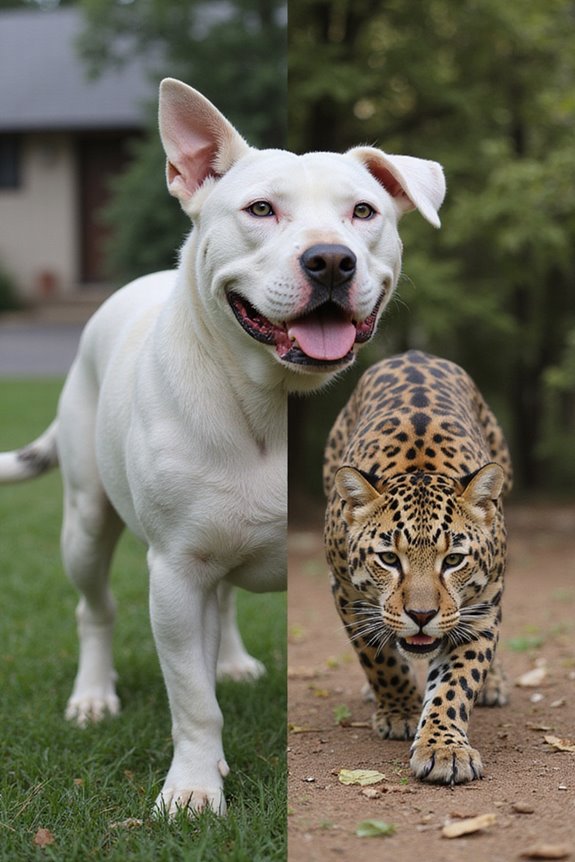
Understanding the behavioral differences between the Dogo Argentino and leopards, particularly in wild versus domestic contexts, reveals how each species has developed unique adaptations that reflect their environments and interactions with humans.
Social Instincts:
- Leopards are solitary, with a strong focus on individual survival.
- Dogo Argentinos thrive in packs, demonstrating cooperative social bonds.
Territorial Behavior:
- Leopards defend exclusive territories, marking them to deter intruders.
- Dogo Argentinos show territoriality but direct it towards protecting human families or designated hunting areas rather than vast territories.
The solitary nature of leopards contrasts sharply with the social instincts of Dogo Argentinos. While leopards avoid risks in confrontations, Dogo Argentinos channel their protective instincts to foster close connections with their human companions, creating a compelling reflection of domestic versus wild behavioral adaptations.
Recommended Products

EFFECTIVE TRAINING TOOL: Rounded tips on martingale style collar offer gentle, effective control for obedience training. Free training guide and online video included through Starmark

Humane and Safe, Eliminate Bad Behavior Effectively: Bousnic Dog shock collar features 3 humane training modes with adjustable beep(1-8 levels), vibration(1-16 levels), safe shock(1-99 levels). It helps your unruly and hard-headed dogs learn to be a better part of your household.

For black dogo argentino owners as dogo argentino accessorie. Buy dogo argentino puppies. For best dogo argentino dad and mom and dogo argentino lover. With argentinian mastiff ornament and dogo argentino toys. Fits to dogo argentino collar and harness.
Origin and Purpose

The Dogo Argentino and the leopard offer fascinating contrasts in their origins and purposes, reflecting their paths shaped by either human intervention or natural selection. The Dogo Argentino traces its roots back to the early 20th century in Córdoba, Argentina, developed by Dr. Antonio Nores Martinez. This breed was created through methodical crossbreeding, incorporating the now-extinct Córdoba Fighting Dog and several purebreds, ultimately aimed at producing a strong, large dog for hunting big game.
In contrast, leopards have evolved over millions of years, adapting to their environments through evolutionary adaptation. As apex predators, leopards maintain ecological balance, employing their natural genetic lineage to thrive in diverse habitats, showcasing a crucial role in their ecosystems.
Temperament and Suitability

When considering the temperament and suitability of the Dogo Argentino and the leopard, it’s essential to recognize their fundamentally different natures, born out of either selective breeding or natural evolution.
Dogo Argentino:
- Loyal, loving, and protective of family.
- Requires consistent socialization to curb aggression due to its hunting background.
- Suitable for active owners with experience in handling large breeds.
Leopard:
- Solitary and elusive, prioritizing survival rather than social dynamics.
- Aggressive instinct-driven behavior limits its interaction with humans.
- Not adaptable to confined habitats, necessitating vast natural territories.
Conclusion:
The Dogo Argentino thrives in family settings with structured training, while leopards cannot be domesticated due to their inherent wildness and behavioral adaptation focused on ecosystem balance.
Health and Lifespan Contrast
While both the Dogo Argentino and the leopard exist within complex health and lifespan narratives, their circumstances diverge markedly due to their respective domestication and environmental contexts.
Health Risks:
- Dogo Argentinos face unique health risks, including:
- Dental disease, which can reduce lifespan by 1 to 3 years.
- Joint problems, common in large breeds.
- Congenital deafness affecting about 10% of the breed.
Lifespan Factors:
- The average lifespan for Dogo Argentinos is 9 to 15 years.
- Leopards typically live between 10 to 15 years in the wild, but can reach up to 20 years in captivity.
Maintaining health through regular veterinary care, nutritious diets, and genetic screenings is vital for both species, emphasizing the need for awareness to guarantee longevity.
Hunting Techniques and Strategies
Health and lifespan metrics offer insights into the distinct characteristics of both Dogo Argentinos and leopards, highlighting their unique challenges and adaptations.
Recommended Products

Track and send training commands up to 9 miles with updates as frequent as 2.5 seconds when used with a compatible handheld (sold separately)

【Compatibility】Only compatible with Apple Airtag. (Airtag is NOT included)

✅【Works with Apple Find My | iOS-Only – Not for Android】 Stop paying for monthly subscription fees! Our MFi-certified dog tracker gps syncs seamlessly with the Apple Find My network—no extra apps or SIM cards required. Note: Exclusively compatible with iOS devices (Not for Android). Locate your furry friend with GPS-like precision on your Find My map. Use a single-touch "Ring" to find them fast if they’re nearby, and receive Left Behind alerts if they wander away—ensuring peace of mind in busy urban streets.
Hunting Techniques and Strategies
- Dogo Argentinos:
- Rely on bay dogs for tracking prey using scent detection.
- Engage once the bay dogs have cornered prey, using pursuit strategies that emphasize speed and strength to pin rather than kill.
- Utilize GPS collars for monitoring movements through dense terrain.
- Leopards:
- Employ stealth and acute sensory perception, stalking silently.
- Hunt primarily at dawn and dusk, relying on camouflage and patience.
- Execute explosive pounces, using agility and a powerful bite to rapidly incapacitate prey, often targeting crucial areas for an effective kill.
Both species exhibit specialized techniques tailored to their environments and hunting needs.
The Role of Humans in Dogo Argentino’s Life
The relationship between Dogo Argentinos and their human caretakers plays a significant role in shaping the breed’s behavior and overall demeanor. Human influence during early socialization is essential, as exposing puppies to various people, environments, and animals fosters adaptability and reduces fear-based aggression. Consistent training is equally important; maintaining uniform commands across all household members prevents confusion and strengthens obedience.
Key points include:
- Early socialization reduces anxiety and behavioral problems.
- Clear, positive reinforcement-based commands encourage cooperation.
- Regular exercise and mental stimulation enhance overall well-being.
Instead of inconsistent or punitive training, stable and nurturing interactions reinforce trust, loyalty, and a balanced temperament. Ultimately, a Dogo Argentino thrives in a structured environment guided by thoughtful human influence and training consistency.
Recommended Products

comprehensive and helpful information

🐕Dog Clicker Training Kit🐕 - Dog clicker training kit contains 1 Silicone dog treat pouch and 1 pack pet training clickers.The dog training treat bag can contact pet food directly,safe and healthy;The dog treat pouch is available in assorted colors (black/beige/navy blue/sky blue/egg green), simplicity and fashion;the blue and white clickers are effective,It's your good choice for training pets.

Frequently Asked Questions
What Are the Primary Differences in Their Diets?
I find their dietary preferences fascinating. The leopard’s strict carnivorous habits focus solely on wild prey, while the Dogo Argentino enjoys a supplemented diet, blending meat with plant ingredients for balance and nutrition. Isn’t that incredible?
How Do Environmental Factors Affect Their Behavior?
I’ve noticed how habitat influence and climate adaptation really shape behavior. For instance, a dog’s environment can boost energy levels or calm them, showing that our surroundings greatly impact how we all thrive and feel.
What Are Common Misconceptions About Each Species?
Oh, the Dogo myths swirl around like candy floss at a carnival! And the Leopard myths? Just as ridiculous! Both are misunderstood, showing strength and warmth, not mere aggression or solitude. Let’s unravel those misconceptions together, shall we?
How Do They Communicate With Others of Their Kind?
When I observe them, I notice how both species communicate. They rely heavily on vocal signals and body language, establishing connections and understanding through their postures, sounds, and gestures, creating a beautiful language uniquely their own.
What Is Their Role in Their Respective Ecosystems?
I believe both Dogo Argentinos and leopards play crucial roles in their ecosystems. The Dogo helps maintain predator-prey dynamics through human interactions, while leopards guarantee ecosystem balance by managing various species naturally. They’re fascinating, aren’t they?