
To enhance your dog’s flexibility, I recommend incorporating specific stretches. Focus on hind limb stretches, like gentle extensions backward and circular flexion movements. Front limb stretches, such as elbow flexion/extension and lateral movements, are also beneficial. Don’t forget shoulder flexor stretches and chest flexibility exercises. Maintain proper form, supporting limbs gently, and hold each stretch for 15-30 seconds. Remember, warming up is essential. Discover additional techniques and structured routines that can further improve your dog’s physical well-being.
Key Takeaways
- Hind Limb Extension stretches the back and pelvis, improving flexibility by gently extending the hind legs backward while keeping the body aligned.
- Elbow flexion and extension enhance front limb flexibility, performed while the dog lies on its side and stabilizing the elbow during the stretch.
- Lateral stretches involve moving the front limb away from the body, promoting shoulder and elbow flexibility without straining the joints.
- Shoulder flexor stretches mimic a ‘high-five’ motion, increasing shoulder flexibility by moving the forelimb forward while stabilizing the elbow.
- Chest flexibility is improved by extending the forelimb away from the chest while the dog sits or lies down, encouraging thorough mobility.
Hind Limb Stretches
You may be interested
When stretching a dog’s hind limbs, it’s essential to follow precise techniques to guarantee both safety and effectiveness. These stretches can greatly enhance hind limb benefits such as increased joint range of motion and muscle elasticity.
- Basic Hind Limb Extension:
- Extend the limb gently backwards while the dog stands or lies on its side.
- Maintain a parallel position of the back and pelvis, holding the stretch for 15 to 30 seconds.
- Repeat on the opposite limb for balanced flexibility.
- Use one hand above the stifle and the other at the hock, moving the leg in a circular motion.
- Hold extended positions for 15 to 30 seconds, repeating 2 to 3 times.
These techniques promote mobility, ensuring your dog feels their best.
Recommended Products

Applicable Objects: The Rear Legs Support Sling Harness aids elderly, disabled, or injured dogs that find it challenging to navigate stairs, get up and down, walk independently, and are prone to falling.

SUPPORT HIP SLING- Loobani lift sling is a simple and effective solution for mobility especially for elderly dogs, weak hind legs, orthopedic injuries, hip dysplasia, Arthritis pain, ACL / CCL surgery or other debilitating ailments

EASY MAINTENANCE: Durable construction allows for convenient machine washing and drying, ensuring long-lasting cleanliness and functionality unlike most other slings
Front Limb Stretches
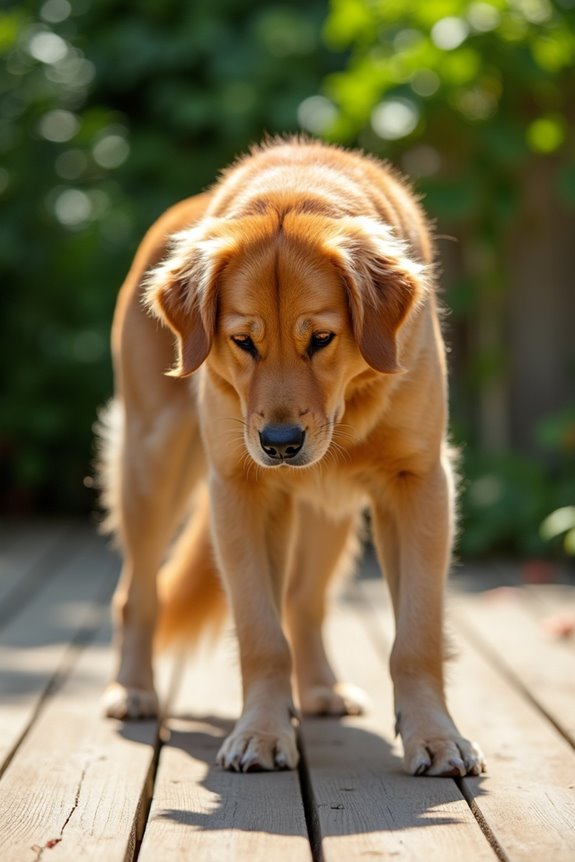
Front limb stretches are essential for maintaining the flexibility and overall health of your dog’s limbs. Focusing on elbow mobility can greatly enhance your pet’s joint health. To perform elbow flexion and extension, position your dog lying on its side, then gently stabilize the elbow while bending it slowly. If resistance occurs, flex the toes to ease the joint. Repeat this process 15-20 times multiple times daily to guarantee effective mobility improvement.
For lateral stretches, gently move the front limb away from the body while guaranteeing no strain on the shoulder or elbow—hold for 15-30 seconds. Frequent repetition fosters flexibility and circulation. As you work with your dog, remember that consistency is key to achieving the best results for their joint health and comfort.
Recommended Products

MEASURE BEFORE ORDER FOR PERFECT FIT Designed for accurate sizing – measure your dog’s leg circumference and length before purchase. Available in multiple sizes with...
Shoulder and Chest Flexibility
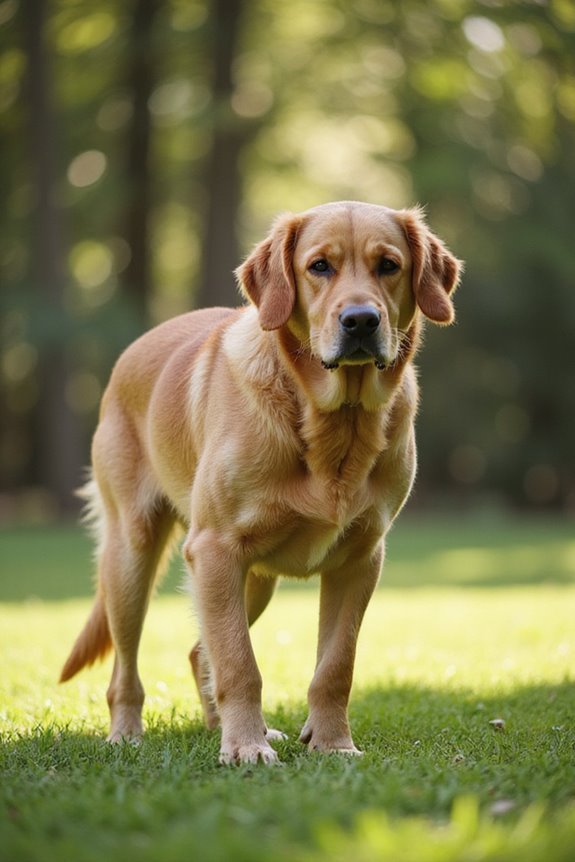
Following our focus on front limb stretches, it’s important to expand our attention to the shoulder and chest regions, as flexibility in these areas considerably contributes to your dog’s overall mobility and well-being.
Shoulder Health
– Perform shoulder flexor stretches by stabilizing your dog’s elbow and gently moving their leg forward, akin to a ‘high-five’. Hold this for 15-30 seconds and repeat 2-3 times.
Chest Mobility
– To enhance chest flexibility, gently move your dog’s forelimb away from their chest while they sit or lie down. Hold this stretch for 15-30 seconds, repeating on both sides.
Recommended Products

High-Quality Elastic Extender Strap: Size: 27.6 x 2 inches, 2 pieces, extends up to more than 40 inches in length. Elastic Strap is made of super-stretch elastic hooks and loops.

Material: The sleeveless nightgown is 95% Polyester and 5% Spandex. Stretchy breathable fabric with great touch, super soft and comfortable

COMFORTABLE & CONVENIENT — PupFlask water bottle carrier is constructed with lightweight neoprene material and a wide shoulder strap to wear comfortably and rest gently on your shoulder. Perfect for carrying your PupFlask hands-free with easy access to fresh water when walking, hiking and traveling with your dog.
Hip and Back Flexibility
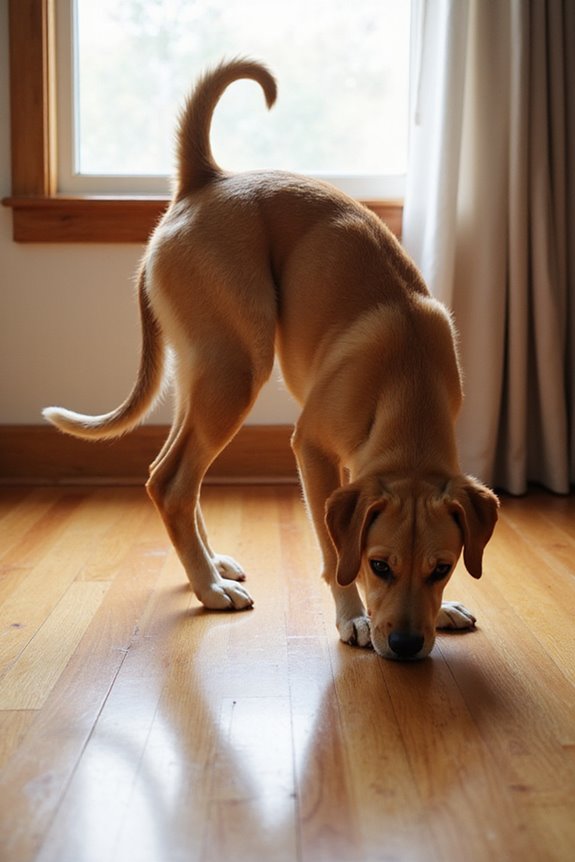
Hip and back flexibility are essential components of a dog’s overall physical health and mobility, as they greatly influence movement quality and prevent injuries. To effectively implement hip flexor stretches, I recommend a few methods:
- Hind Limb Extension: While your dog stands or lies on its side, gently extend the hind limb backward, ensuring the back and pelvis remain parallel to the ground.
- Elevated Positioning: Place the front legs on a stable, non-slip surface higher than the back legs to stretch the iliopsoas.
- Spinal Mobility: Encourage slow, backward hind limb extensions to promote lumbar spine flexibility.
- Repetition and Rest: Hold each stretch for 5 to 30 seconds and repeat 3 to 5 times, allowing breaks in between to let your dog relax.
Recommended Products

【Sofa-Style 3-Sided Bolster Design】 This orthopedic dog couch bed features a 3-sided raised bolster that supports your pet’s neck, head, and spine—perfect for...
General Stretching Guidelines for Dogs
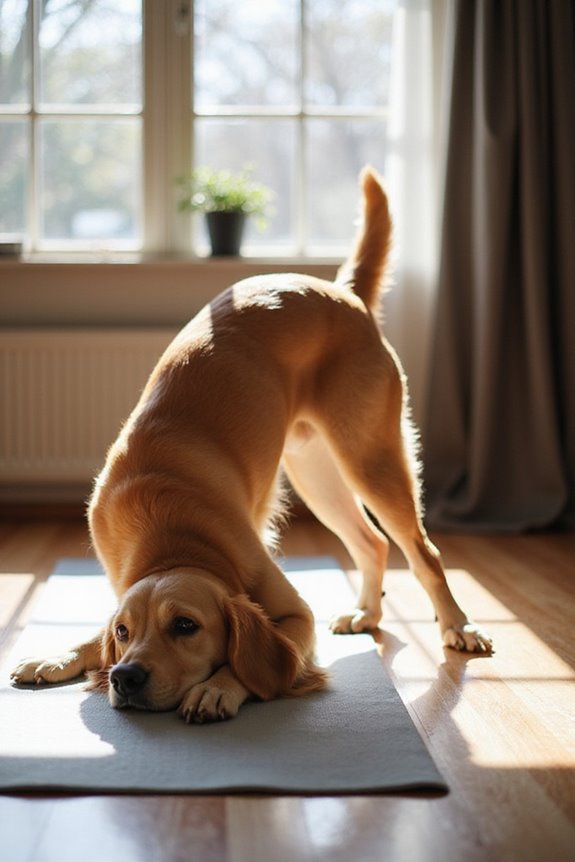
When it comes to stretching your dog, it’s important to follow general guidelines that promote safety and effectiveness. First, always emphasize the warm-up importance before engaging in stretching techniques. Begin with gentle movements to help your dog relax and prepare their muscles. Use both hands to support their limbs, and gradually increase stretch intensity based on their comfort and flexibility.
Hold each stretch for 5 to 30 seconds, watching for any signs of discomfort or resistance. Positive reinforcement, like treats or gentle praise, can strengthen cooperation. Make certain movements are slow and controlled, focusing on major joints and muscle groups. Adjust your approach depending on your dog’s individual sensitivities and maintain a calm, distraction-free environment to facilitate a pleasant stretching experience.
Recommended Products

Large Dog Harness - Recommended Breeds: Medium to Large Dogs, such as Siberian Husky, Labrador, German Shepherd, Akita, Chow Chow, Schnauzer Giant,American Pit Bull Terrier, etc. Please measure your dog's neck and check girth carefully before purchasing this present for your puppy. Make your puppy stand out with this Classic Black Harness!

【No Pull & No Choke Design】: This harness simply goes through the dog's head, snaps on the belly and that's the end of it. Besides, the D-ring on the chest strap is used for no pull dog training and guiding direction, and the O-ring on the back is used for daily dog walking. The triangular design on both sides of this no pull harness helps to distribute the pulling force, so you don't have to worry about the dog choking when suddenly pulling.

Effective No-Pull Solution: The PetSafe Easy Walk Harness helps create pull-free walks by using a martingale loop design that applies gentle, gradual pressure to reduce lunging
Frequently Asked Questions
How Often Should I Stretch My Dog?
You’ll find that integrating gentle stretching into your dog’s daily routine brings so many stretching benefits! I make it a point to monitor their habits closely, ensuring they’re comfortable and enjoying it while staying active together.
Can Stretching Help With My Dog’s Joint Pain?
Yes, stretching can truly aid your dog’s joint health and provide pain relief. I’ve seen firsthand how gentle stretches improve mobility, reduce stiffness, and enhance overall comfort for our furry companions. It’s worth trying!
Are There Specific Stretches for Agility Dogs?
In agility training, think of stretch techniques as bridges to flexibility. They’ll connect your dog’s potential with performance. Simple moves like cookie stretches open pathways, nurturing their graceful movement and preventing injuries, deepening our bond.
What Signs Indicate My Dog Is Overstretched?
I’ve noticed some overstretching signs in my dog, like limping or whimpering after our sessions. Watching for these cues is essential; they could mean we need to adjust our approach to maintain their flexibility safely.
Should I Consult a Vet Before Stretching My Dog?
Imagine jumping into a dance without warm-up—it’s risky! I’ve learned it’s wise to seek vet recommendations before starting any stretching techniques for my dog. Their insights guarantee safety and effectiveness, keeping my furry friend happy!